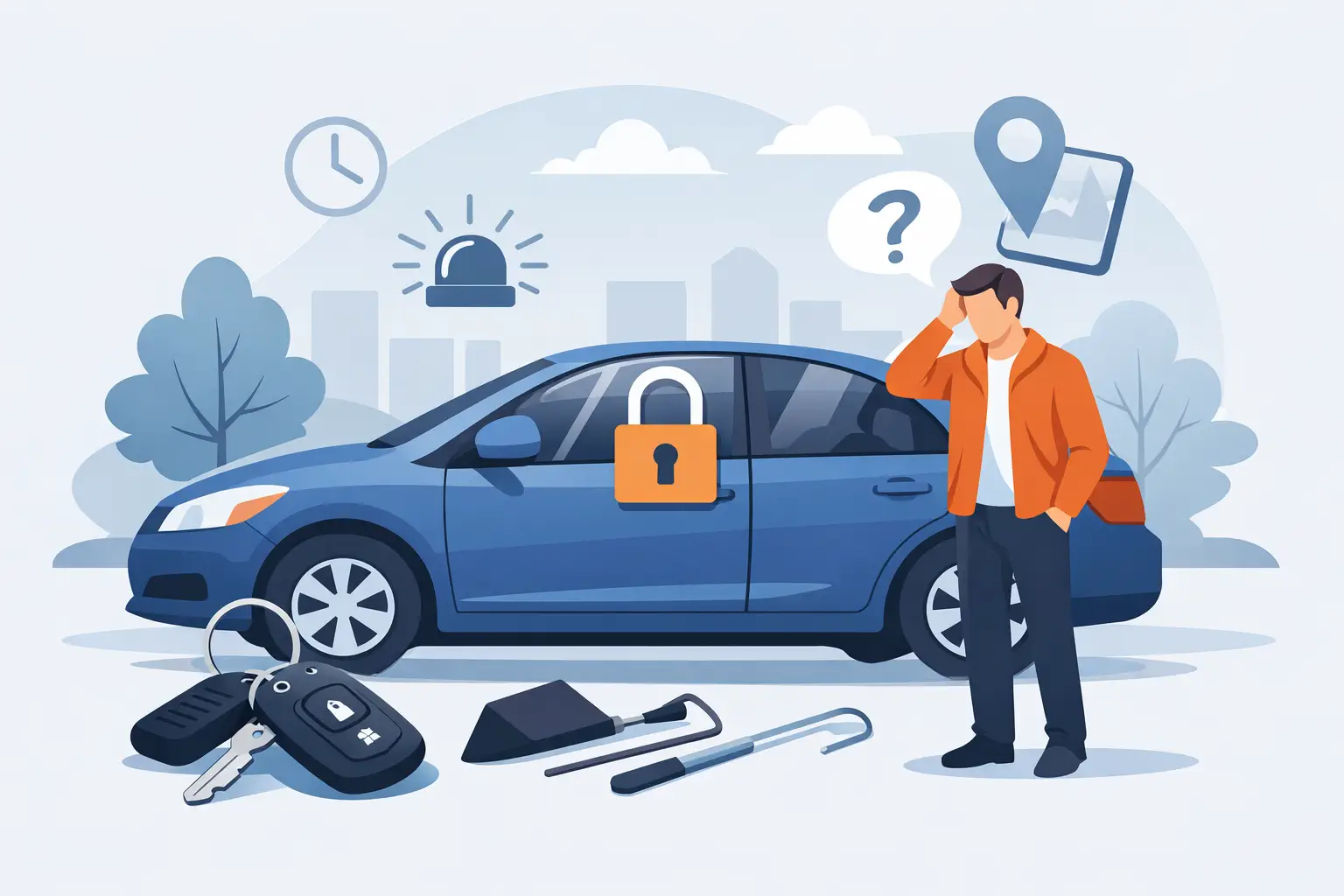

You close the door, hear the lock engage, and see your keys sitting on the seat. The first few seconds of a car lockout can feel frantic, especially when you are parked somewhere unfamiliar, facing heavy South Florida heat, or trying to get to work, school, or an appointment. This car lockout help guide gives you a clear plan: protect yourself first, avoid damaging the vehicle, and get the right help without wasting time.
Start With Safety, Not the Door
Before trying anything, take a breath and look at your surroundings. If you are parked in traffic, on a highway shoulder, in a dark area, or anywhere you do not feel safe, move to a secure, visible location if possible. Call for professional help promptly rather than staying alone beside the vehicle.
Check for immediate risks inside the car. A child, pet, vulnerable adult, or anyone with a medical concern inside a locked vehicle is an emergency, particularly in Florida’s heat. Call 911 right away. Do not wait for a locksmith, roadside plan, or a spare key if someone could be in danger.
If everyone is safe, take a quick look at every door, the trunk, and any windows that may have been left partially open. Be careful not to force a handle or pull repeatedly on electronic components. A simple check is reasonable. Aggressive attempts can turn a lockout into a damaged latch, broken window, or costly door repair.
Car Lockout Help Guide: Check Your Best Options
The right response depends on your vehicle, where you are, and whether you have access to another key. Start with the lowest-risk option.
If a family member, roommate, or trusted friend can bring a spare key quickly, that may be the simplest solution. It is often a good choice when you are safely parked at home or work and the wait will be short. Keep in mind that a spare key across town may not be practical when you are stranded, exposed to heat, or on a tight schedule.
Your vehicle manufacturer’s app may also help, but only for certain makes, models, subscriptions, and situations. Remote unlock features can fail when the app is not set up, your phone has no signal, the vehicle’s battery is dead, or account verification takes too long. It is worth checking, but do not rely on it as your only plan.
Roadside assistance can be useful if it is part of your insurance, auto club membership, or vehicle warranty. The trade-off is wait time. Some providers dispatch a local locksmith, while others may have limited availability during high-demand periods. Ask who is being sent, how long the arrival is expected to take, and whether the service includes your specific type of vehicle.
For fast, direct assistance, a mobile automotive locksmith is usually the best fit. A qualified technician can open the vehicle using methods designed to protect the lock, door frame, weather stripping, and electronics. They can also help if the issue involves a broken key, damaged fob, lost key, or a key that will not turn in the ignition.
Do Not Turn a Lockout Into Damage
Online videos often make vehicle entry look easy. In reality, modern cars have tight door seals, side-impact protection, electronic locking systems, airbags, sensors, and delicate interior components. The wrong tool or technique can cause hidden damage that is far more expensive than a professional lockout service.
Avoid using coat hangers, screwdrivers, wedges, shoelaces, antenna parts, or improvised slim jims. These methods can scratch paint, bend the door frame, tear weather stripping, damage lock rods, or trigger electrical problems. A bent frame may also create wind noise and water leaks long after the lockout is over.
Breaking a window is almost never the right answer unless emergency responders instruct you to do so because a person or animal is in immediate danger. Glass creates a serious injury risk, leaves the vehicle exposed, and can require urgent cleanup and repair. In a non-emergency, professional entry is safer and usually less costly.
Also be cautious about asking a stranger in a parking lot to open the car. Even a well-meaning person may damage the vehicle, and you may be sharing details about your keys, belongings, or daily routine with someone you do not know.
What a Professional Locksmith Will Need
A legitimate automotive locksmith should confirm that you are authorized to access the vehicle. Have your driver’s license, registration, insurance card, rental agreement, or other proof of ownership available. If those documents are inside the car, explain that when you call. A professional can tell you what verification will be needed after entry.
When requesting service, provide the year, make, and model of the vehicle, your exact location, and a short description of what happened. Mention whether the key is locked inside, lost, broken, or not working. Those details help the technician arrive with the proper tools and prepare for key programming if needed.
Ask for clear pricing before service begins. The final price can depend on vehicle type, key technology, travel distance, time of day, and whether the job requires a replacement key or programming. A trustworthy provider explains the expected charge and does not pressure you into unnecessary work.
General Locksmith provides mobile, 24/7 automotive lockout assistance across Broward County and nearby South Florida communities. Licensed, insured, and bonded technicians can help you regain access without damaging your vehicle, including on weekends and holidays. For immediate help, call 954-243-1381.
If Your Keys Are Lost, Broken, or Electronic
A lockout is not always just a locked key inside the car. If the key is lost, a locksmith may be able to create a replacement based on the vehicle’s information and program it when required. This is often more convenient than arranging a tow and waiting at a dealership, though availability depends on the make, model, and key system.
A broken key needs careful handling. Do not keep turning it if it is sticking in the door or ignition. Forcing it can snap the blade or damage the lock cylinder. If part of the key has already broken off, avoid probing the keyway with tweezers, pins, or glue. A locksmith can extract the broken piece and determine whether the lock or ignition needs repair.
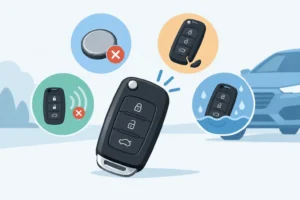
Key fobs create a different set of issues. A dead fob battery, damaged remote, depleted vehicle battery, or programming failure can all look like a lockout. Many vehicles have a mechanical emergency key hidden within the fob, but its location and use vary by model. Your owner’s manual can help if you have access to it. If not, a trained automotive locksmith can identify the safest next step.
Prepare for the Next Time
Once you are back inside, make one small change that reduces the chance of another lockout. Store a spare key with a trusted person rather than hiding it on or under the vehicle. Hidden magnetic boxes are easy for thieves to find and can expose your car to theft.
If your vehicle supports a manufacturer app, set it up before you need it and make sure account recovery details are current. Replace weak fob batteries before they fail completely, especially if you notice reduced range or inconsistent locking. For drivers who frequently share a vehicle, decide where spare keys will be kept and who can access them.
A car lockout is frustrating, but it does not have to become dangerous or expensive. Stay in a safe place, resist quick-fix entry methods, and call a qualified professional when time and vehicle protection matter. The fastest solution is usually the one that gets you moving again without leaving damage behind.