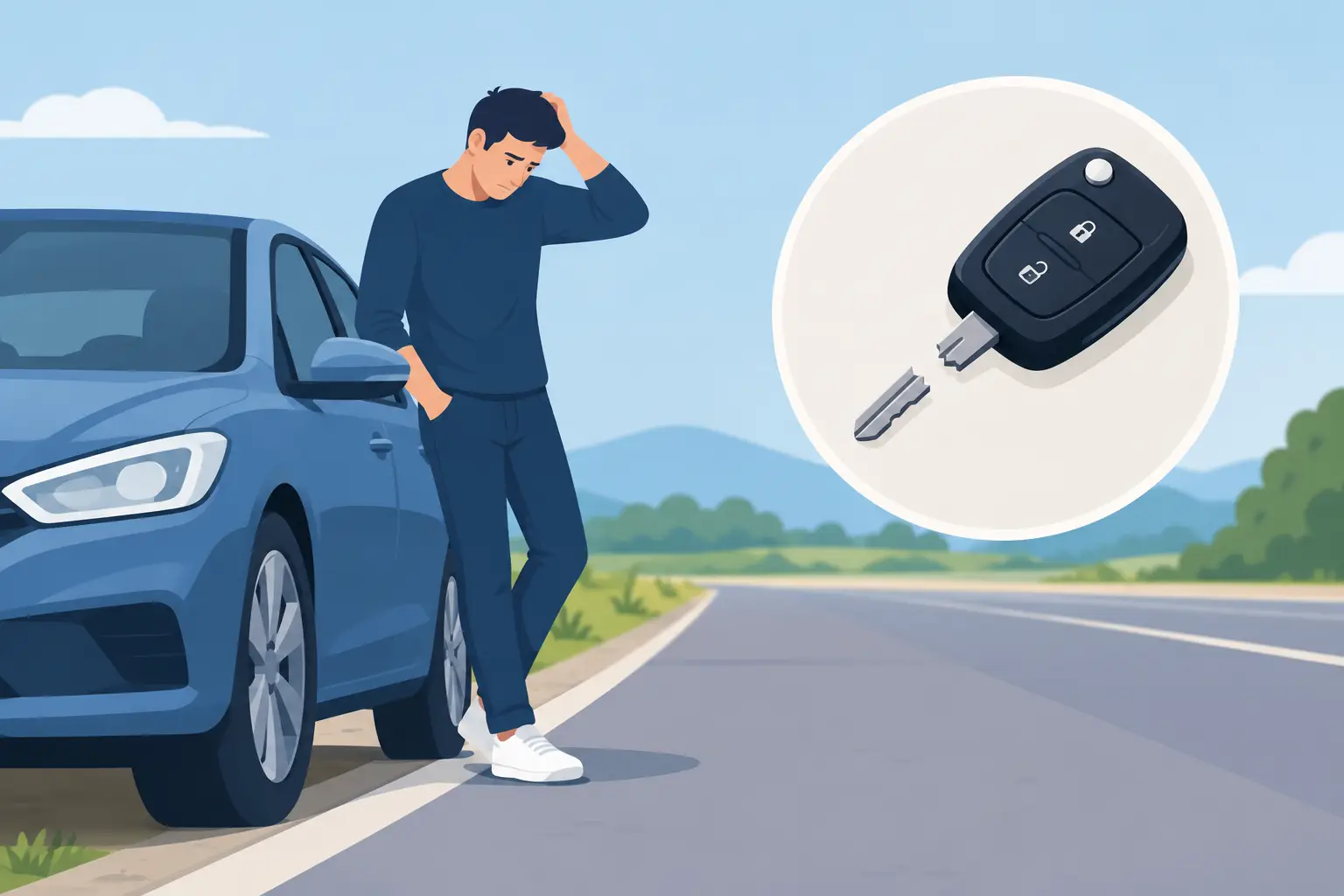

A key can break in the ignition with almost no warning. You may be parked at work, stuck outside a store, or trying to leave home when the key snaps and leaves part of the blade inside the cylinder. If you need broken ignition key help, the next few minutes matter. A rushed attempt to pull out the fragment can damage the ignition and turn a straightforward key service into a more involved repair.
Take a breath, secure the vehicle, and avoid forcing anything into the keyway. A qualified mobile locksmith can assess the situation where you are, extract the broken piece safely, and determine whether you need a replacement key, ignition repair, or both.
What to Do When a Key Breaks in the Ignition
First, stop turning the remaining piece of the key. If the key is partially inserted and you can still see enough of it to grasp without pulling hard, leave it alone until a professional can inspect it. Pulling at an angle can push the broken section deeper into the ignition cylinder.
Make sure the vehicle is in park or neutral, set the parking brake, and move to a safe location if you can do so without driving. If you are on the roadside, turn on your hazard lights and stand away from traffic. Do not attempt to start the vehicle by turning the broken key fragment with pliers, a screwdriver, or another object.
If the steering wheel is locked, do not force it. Steering lock pressure can make a key difficult to turn or remove, but aggressive movement may bend internal ignition parts. A locksmith can relieve the pressure properly and check whether the key broke because of a lock issue rather than simple wear.
Call a mobile automotive locksmith when the key fragment is stuck, the ignition will not turn, or you do not have a working spare. For fast assistance in Broward County and surrounding South Florida areas, General Locksmith is available 24/7 at 954-243-1381.
What Not to Use for Broken Ignition Key Help
Online videos often make key extraction look easy. The reality is that vehicle ignitions are precise components, and improvised tools can create costly damage. Avoid using super glue, magnets, paper clips, bobby pins, tweezers, or household pliers.
Super glue is especially risky. Glue can run into the ignition cylinder and bond pins or wafers inside the lock. Even if it attaches to the key fragment, the adhesive may fail before the fragment moves, leaving a larger repair behind.
Tweezers and needle-nose pliers only work when a significant portion of the key is already exposed. In most cases, they cannot grip the broken edge without pushing it farther in. A locksmith uses purpose-built extraction tools designed to catch the key cuts without harming the cylinder.
Spraying excessive lubricant into the ignition is also not a solution. The problem could be a worn key, a damaged cylinder, or an internal component that has failed. Adding the wrong product can attract debris and make the lock feel worse over time.
Do Not Try to Drive With Half a Key
Some drivers discover that the broken head of the key is all that came off, while most of the blade remains in the ignition. It may be tempting to turn the remaining piece and drive away. That is a gamble. If the fragment shifts while driving, you could be unable to restart the vehicle after you park.
More importantly, a key that broke once is usually worn, bent, or weakened. Continuing to use it can cause another break inside a door lock, trunk lock, or ignition. It is safer to have a new properly cut key made before relying on the vehicle again.
Why Ignition Keys Break
Keys rarely break for no reason. Metal fatigue is common, especially with older keys that have been used daily for years. A key can also weaken from being bent in a pocket, used to open packages, or weighed down by a heavy key ring.
Sometimes the key is not the root cause. A worn ignition cylinder may bind, making the driver apply more pressure every time they start the vehicle. Dirt, internal wear, damaged wafers, and steering lock pressure can all make turning the key difficult. Eventually, the key may snap under that repeated strain.
Modern vehicles add another consideration. Many car keys contain a transponder chip that communicates with the vehicle’s immobilizer. Even after the broken blade is removed, a basic hardware-store copy may not start the car unless it is cut correctly and programmed for that vehicle.
What a Mobile Locksmith Can Do at Your Vehicle
A professional automotive locksmith begins by checking how deeply the key broke and whether the ignition is damaged. The broken section is extracted using specialized tools, not forced out with makeshift items. Once it is removed, the technician can inspect the key and test the ignition’s operation.
If the ignition still works correctly, the solution may be as simple as cutting a new key from the original key code or an available working key. If your vehicle uses a chip key, remote-head key, or key fob, programming may also be required so the vehicle recognizes it.
When the ignition cylinder is worn or damaged, the locksmith may recommend repair or replacement. This is not always necessary, which is why diagnosis matters. Replacing a cylinder that only needs cleaning or minor repair wastes money. On the other hand, ignoring an ignition that binds or sticks can leave you stranded again soon.
A mobile service is particularly useful because the vehicle does not need to be towed just to receive an assessment. The locksmith comes to your location with the equipment needed for extraction, key cutting, and many vehicle key programming situations.
Signs You Should Repair the Ignition, Not Just Replace the Key
A new key is often enough when the old key is visibly worn but the ignition turns smoothly with another key. However, certain symptoms point to an ignition problem that deserves attention.
If the key has been hard to insert, difficult to turn, or likely to get stuck in the accessory or start position, the cylinder may be failing. Other warning signs include needing to jiggle the key to start the vehicle, the key turning without electrical response, or multiple keys showing the same problem.
Do not wait until the ignition completely fails. A repair appointment is usually less stressful than an emergency call from a parking lot, and it gives the technician time to recommend the most practical option for your vehicle and budget.
The Difference Between an Ignition Problem and a Dead Battery
A dead battery can prevent the engine from starting, but it usually does not cause the physical key to bind, snap, or refuse to turn. If dashboard lights are weak or absent but the key turns freely, the battery may be the issue.
If the key will not rotate, will not come out, or broke inside the cylinder, focus on the ignition and key first. A locksmith can help identify the mechanical issue and avoid unnecessary repairs based on a guess.
How to Prevent Another Broken Key
Once you are back on the road, treat a sticky ignition as an early warning. Use the new key rather than returning to a worn spare. Keep heavy keychains to a minimum, since the extra weight can put strain on the ignition while the vehicle is moving. Avoid twisting the key hard when the steering wheel is locked, and have the ignition checked if turning it requires repeated jiggling.
It also helps to keep a spare key in a safe, accessible place. For transponder and remote keys, make sure the spare is actually programmed and tested. A spare that only unlocks the door will not solve a no-start situation.
A broken key is frustrating, but it does not have to become a damaged ignition or an expensive tow. Leave the fragment where it is, get to a safe place, and call a qualified mobile locksmith for the right repair. Help is available day or night at 954-243-1381, so you can replace the guesswork with a clear next step.