
A key that will not turn or come back out can stop your day fast. If you are asking, why is my key stuck, the safest first move is simple: stop forcing it. A little extra pressure can turn a minor lock issue into a broken key, damaged cylinder, or a door you cannot secure.
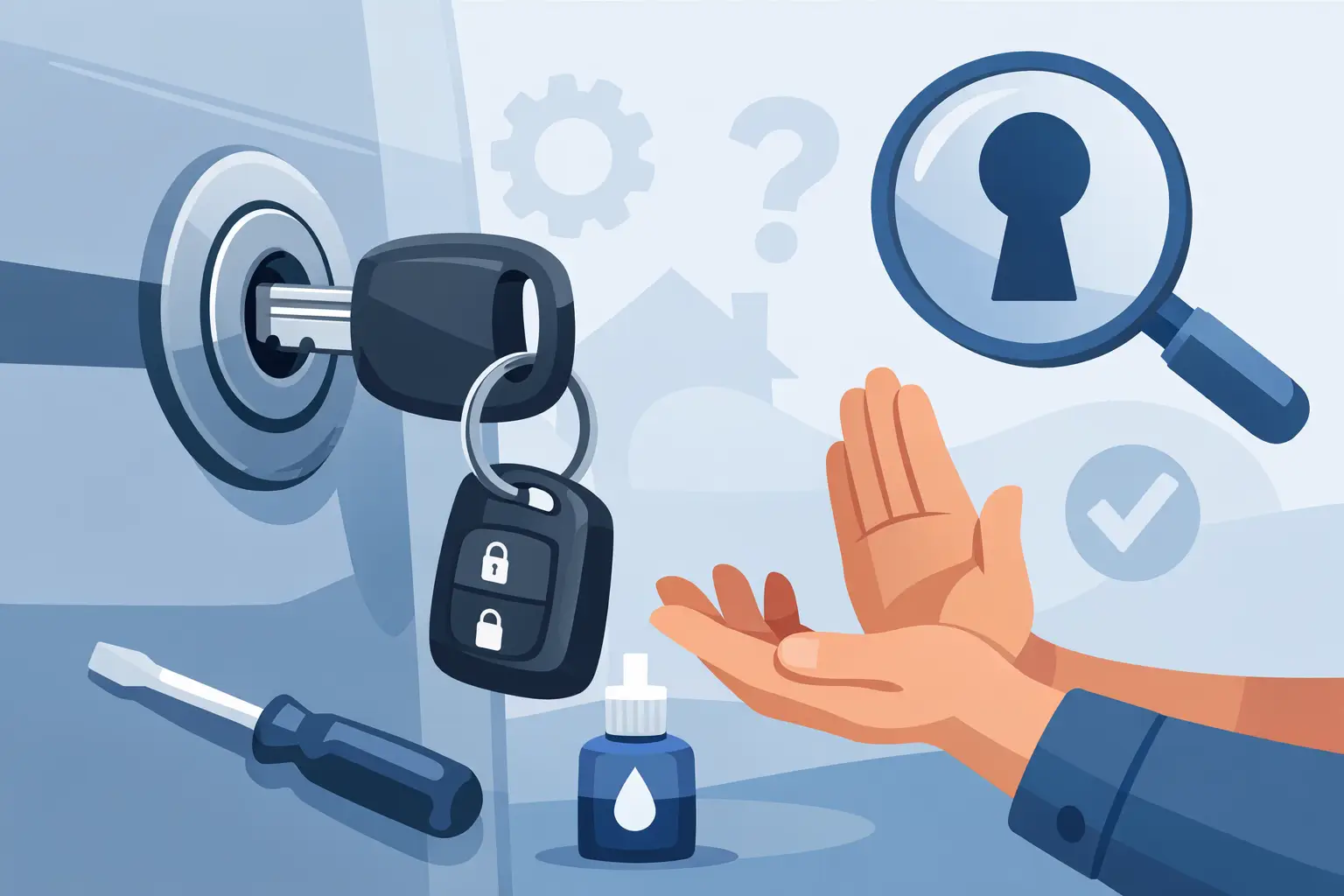
Keys get stuck for several reasons, from normal wear and dirt inside the lock to door misalignment, a bent key, or a failing ignition. Some situations have a safe, quick fix. Others need a professional locksmith before the key snaps or the lock is damaged further.
Why Is My Key Stuck in the Lock?
A lock works because the cuts on your key line up a set of small internal pins. When those pins align correctly, the cylinder can turn. If the key is worn, the cylinder is dirty, the door is putting pressure on the bolt, or an internal part has failed, that alignment may not happen. The key can feel jammed, turn only partway, or refuse to come out.
In South Florida, humidity, moisture, and salt air can also contribute to corrosion in exterior locks. A lock that worked fine last month may begin sticking after repeated exposure to the elements, especially on gates, storefront doors, and older entry hardware.
The door or bolt is under pressure
This is one of the most common causes when a key is stuck in a deadbolt or doorknob. The door may have shifted slightly from heat, settling, loose hinges, or weather changes. As a result, the deadbolt presses against the strike plate rather than sliding freely into it.
You may notice that the key turns more easily when you push, pull, lift, or slightly reposition the door. Do not twist the key hard while testing this. Instead, gently push the door inward, then try pulling it toward you while applying only light turning pressure to the key. If one position releases the tension, the key may turn or slide out normally.
The key is bent, worn, or the wrong copy
A key does not need to look severely bent to cause trouble. Even a slight twist can keep it from lifting lock pins to the correct height. Worn keys can create the same issue, particularly if you use an old duplicate that has been copied several times over the years.
Look at the key from the side. If it appears curved, twisted, cracked, or has noticeably worn teeth, do not keep using it. Try an original key or a newer, properly cut spare if one is available. Never attempt to straighten a key while it is inside the lock. It can break without warning.
The lock cylinder is dirty or dry
Dust, metal particles, corrosion, and old lubricant collect inside locks over time. This is especially common with exterior locks and heavily used business doors. The key may insert normally but feel rough, bind during rotation, or resist removal.
A small amount of lock-specific dry lubricant may help if the key is fully accessible and the lock is not damaged. Use a dry PTFE lock lubricant or another product designed specifically for lock cylinders, following the product instructions carefully. Insert and remove the key gently a few times to distribute it.
Avoid soaking the lock with oil, grease, or household lubricants. These can attract dirt and create a thicker buildup that makes the problem worse later. If the key is already tightly stuck, adding product and continuing to force it is not the answer. Call a locksmith instead.
The lock has an internal failure
A damaged pin, spring, cam, tailpiece, or cylinder can trap a key even when the key itself is in good shape. You may feel unusual grinding, a sudden change in resistance, or a key that turns loosely without operating the lock. High-traffic commercial doors, old locks, and locks that have been forced in the past are more likely to develop internal problems.
Internal lock repairs are not a DIY job when the key is trapped. Trying to pull apart a lock while the door is closed can leave you locked out, damage the hardware, or compromise the security of the door. A locksmith can identify whether the cylinder can be repaired or whether replacement is the safer option.
What to Do When a Key Is Stuck
Start by taking pressure off the key. Keep the key as straight as possible and avoid twisting it sideways. If it is in a door lock, gently move the door toward and away from the frame while applying light pressure in the direction the key normally turns. Do not yank the key or use pliers, which can bend the blade or snap it at the keyway.
If the key has turned but will not come out, make sure it is back in the exact vertical removal position. Many keys cannot be removed unless the cylinder is fully aligned. Carefully return it to that position without forcing it.
If you have a spare key, use it only after removing the stuck key safely. Do not insert a second key alongside it or attempt to push the stuck key out from the other side. Most residential and commercial cylinders are not designed for that, and you could damage the pins.
Stop immediately and call for help if the key starts to bend, you hear a crack, the lock feels loose, or the key is stuck deep enough that you cannot hold it securely. A broken key inside a lock often requires extraction and may also require cylinder repair or replacement.
Why Is My Car Key Stuck in the Ignition?
A car key stuck in the ignition is different from a house key stuck in a lock. On many vehicles, the ignition key cannot be removed unless the shifter is fully in Park and the ignition is in the correct OFF position. A worn shifter cable, faulty park-interlock switch, steering wheel pressure, or ignition cylinder issue can keep the key trapped.
First, press the brake pedal and firmly move the shifter into Park. Do not assume it is fully engaged just because the indicator says it is. Hold the brake, move the shifter slightly, return it to Park, and then try turning the key to OFF.
Steering wheel tension can also bind the ignition. If the wheel is locked against the curb or turned hard to one side, gently move the steering wheel left and right while turning the key lightly. There is usually a small amount of movement in one direction that releases the pressure.
Do not pull hard on a car key, especially a modern key with a transponder chip, remote head, or integrated fob. Replacements can be more involved than a standard house key, and damage to the ignition cylinder can add unnecessary repair costs. If the vehicle is running, in an unsafe location, or blocking traffic, get help right away.
Push-button start and smart-key issues
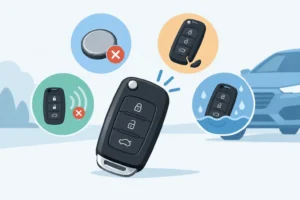
With push-button vehicles, the physical emergency key may be stuck in the door handle or a backup key slot rather than an ignition. A weak key-fob battery, damaged emergency key, or faulty door-lock cylinder may be involved. If your vehicle will not recognize the fob, avoid repeatedly forcing the emergency key in the lock. A qualified automotive locksmith can diagnose the key, fob, and lock system without guessing.
When to Call a Locksmith Right Away
Call for professional help when you cannot remove the key with gentle movement, when the key is visibly bent, or when the lock does not operate as it should. Immediate service is also the right choice if the stuck key leaves your home, business, or vehicle unsecured.
For business owners and property managers, a sticking key can be an early warning that a frequently used lock is nearing failure. Repairing or replacing it before a key breaks during opening hours protects access, employee safety, and daily operations. It may also be a good time to discuss higher-security hardware if the existing lock is worn or outdated.
General Locksmith provides mobile residential, commercial, and automotive locksmith service throughout Broward County and surrounding South Florida areas. Our licensed, insured, and bonded technicians are available 24/7, including weekends and holidays, to remove stuck keys, repair damaged locks, and restore secure access. Call 954-243-1381 for immediate assistance.
A stuck key is frustrating, but it does not have to become a broken-key emergency. Keep your hands off the pliers, use only gentle pressure, and get professional help before a small lock problem leaves you stranded or unable to secure your property.