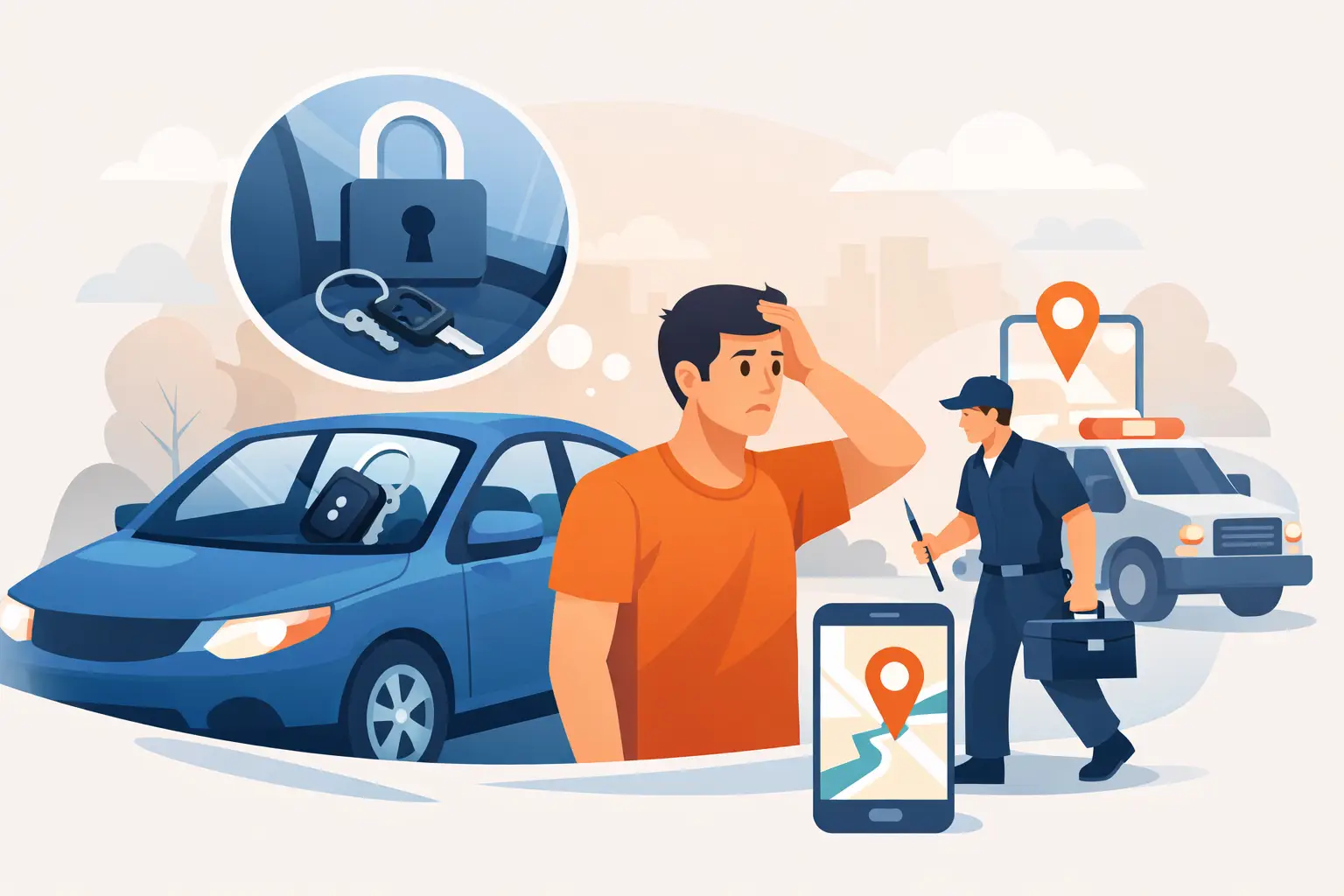

It usually happens at the worst possible moment – gas pump running, groceries melting, a child’s backpack on the seat, your phone battery at 8%. If you’re dealing with locked keys in car who to call is the first question that matters, and the answer depends on how urgent the situation is, where you are, and what kind of vehicle you drive.
The good news is that most car lockouts can be handled quickly without damaging the door, window, or lock. The wrong move, though, can turn a simple lockout into an expensive repair. In a stressful moment, speed matters, but so does calling the right help.
Locked keys in car who to call first
If there is a child, pet, elderly passenger, or anyone medically at risk inside the vehicle, call 911 first. Heat builds fast in South Florida, and what feels like a minor delay can become dangerous in minutes. Emergency services should always be the first call when someone’s safety is at risk.
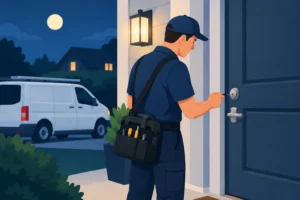
If no one is in immediate danger, a licensed automotive locksmith is usually the best first call. A mobile locksmith can come to your location, open the vehicle using the proper tools, and in many cases help if the issue is more than a simple lockout. That matters when the problem turns out to be a broken key, a dead key fob, a jammed lock, or keys locked in the trunk instead of the cabin.
Roadside assistance can also help, but response times vary. If you have coverage through your insurance company, auto club, or vehicle warranty, it may be worth checking. Just remember that some roadside providers subcontract the actual work, so arrival time and experience level can be less predictable than calling a locksmith directly.
If your vehicle is newer or has a brand-specific access issue, the dealership may be part of the solution, but rarely the fastest one. A dealer can advise on replacement fobs or security programming, but for standing in a parking lot right now, they are usually not the quickest way back into your car.
When a locksmith is the best choice
A professional locksmith is often the right answer because the problem is not always just the lock. Modern vehicles may have side-impact air bags in the door, electronic locking systems, anti-theft protections, and delicate weather stripping that can be damaged by improvised entry attempts.
A trained mobile locksmith knows how to open the vehicle with the least risk. They also know when not to force entry. That matters with luxury cars, vehicles with deadlocked systems, and cars with keyless entry that may have battery or programming issues instead of a basic lockout.
This is also the practical choice if you do not have roadside coverage, do not want to wait on hold, or need help after normal business hours. A true 24/7 mobile locksmith can come directly to the vehicle, whether you’re at home, at work, in a parking garage, or on the side of the road.
What to ask before you call for help
Not every lockout service is equal. In an emergency, people often call the first number they see, then find out too late that the quoted price changed or the technician was not properly qualified.
Ask whether the company is licensed, insured, and bonded. Ask for an estimated arrival window. Ask whether the quoted price includes the service call, labor, and after-hours charges. If you drive a high-security or late-model vehicle, ask whether they handle that make and model regularly.
A real locksmith should be able to explain the process clearly. They should also tell you if the situation might require more than opening the door, such as key extraction, key replacement, ignition work, or fob programming. Clear answers build trust fast, especially when you are standing outside a locked vehicle and need help now.
What not to do when your keys are locked in the car
The biggest mistake is trying to fix it with random tools. Coat hangers, screwdrivers, wedges from the garage, and online hacks can bend the door frame, tear the weather seal, scratch paint, damage the lock linkage, or crack a window. What starts as a lockout can become a body repair.
Be careful with remote unlocking apps too. They can work, but only if the setup was completed earlier and the vehicle has the right connectivity. In the wrong moment, people waste twenty minutes resetting passwords and trying app features that were never activated.
It is also smart not to leave the vehicle unattended in an unsafe location while you search for help. Stay aware of your surroundings, especially at night or in isolated areas. If you feel unsafe, move to a nearby business or populated spot while you wait for assistance.
Different situations change who to call
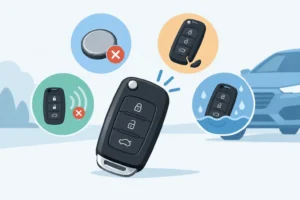
There is no single answer for every lockout. If your keys are visible on the driver’s seat and the car is otherwise fine, a locksmith or roadside provider can usually resolve it quickly. If the key fob battery is dead and the car thinks the key is missing, you may still need a locksmith because the issue is electronic, not just mechanical.
If the keys are locked in the trunk, the fix can be more complicated. Some cars isolate trunk access from the cabin, and some electronic systems behave differently once the vehicle is fully locked. That is another reason professional help makes sense.
If the key snapped in the door or ignition, you need more than entry. If your only key is lost altogether, you may need a replacement key cut and programmed on site. That is where an automotive locksmith has a major advantage over a generic roadside service.
For drivers in Broward County, quick mobile response can make a big difference because traffic, heat, and long wait times all add stress to an already bad situation. In that kind of moment, a local locksmith with 24/7 dispatch is often the most direct path back into your vehicle.
How to know the service is legitimate
Trust matters when someone is coming to your location and accessing your vehicle. Look for a company that asks for proof that the vehicle belongs to you or that you are authorized to access it. A professional should verify ownership before opening the car.
It also helps if the company has a clear service identity, answers the phone professionally, and gives you direct information instead of vague promises. If the quote is unusually low, be cautious. Very low pricing often changes once the technician arrives.
General Locksmith, for example, emphasizes licensed, insured, and bonded mobile service with 24/7 availability, which is exactly the kind of credibility drivers should look for in an urgent lockout.
Can the police or fire department help?
Sometimes, but it depends. In some areas, police departments no longer handle routine car lockouts unless there is a safety emergency. Fire departments generally focus on immediate danger, not standard lockout service. That is why calling 911 for a non-emergency vehicle lockout is usually not the right move unless someone inside the car is in danger.
For ordinary lockouts, a locksmith is the more appropriate call. They have the tools and training for the job, and they are there to solve access problems without tying up emergency resources.
How to prevent the next lockout
After one lockout, most drivers want a backup plan. A spare key at home helps, but only if someone can bring it to you. A better option may be keeping a second key in a secure, separate place or ordering a backup fob before you actually need one.
It also helps to replace weak key fob batteries early, use your car’s app features if available, and get sticky locks or worn keys checked before they fail completely. Small warning signs usually show up before a bigger problem does.
If your vehicle key is damaged, inconsistent, or your remote only works sometimes, take care of it now. Waiting until you are locked out in a parking lot is always the more expensive and stressful version of the same problem.
When your keys are locked in the car, the right call is the one that gets you safe, fast, and back on the road without damage. Start with emergency services only if someone inside is at risk. Otherwise, call a licensed mobile locksmith who can handle the vehicle you drive and tell you exactly what happens next. A calm, qualified response turns a bad moment into a short delay – and that is often all you really need.