
The keys may all be accounted for, but that does not always mean your property is secure. If you have moved, changed tenants, lost a key, or had employees leave, you may be asking: when should locks be rekeyed? The answer is usually sooner than most people think. Rekeying gives you control over who can enter without automatically paying to replace every lock on the property.
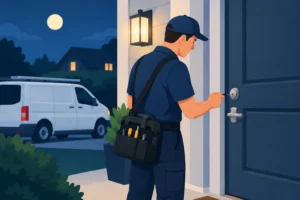
For homeowners, landlords, and business owners across South Florida, rekeying is one of the fastest ways to close a security gap. A mobile locksmith can often complete the work at your location, allowing you to use new keys while keeping compatible, properly functioning lock hardware in place.
What rekeying actually changes
A lock is rekeyed by changing its internal pin configuration so the old key no longer operates it. The exterior hardware can remain on the door, but a newly cut key is required to open it. This is different from simply making more copies of an existing key, which does nothing to stop someone with an old copy from getting in.
Rekeying is often a practical choice when the lock is in good condition and provides the level of protection you need. It can also allow several doors to be set to one key, making access easier for a homeowner or property manager.
However, rekeying will not repair a worn, damaged, or low-quality lock. If the latch sticks, the deadbolt is loose, the key is difficult to turn, or the hardware does not provide enough security for the door, replacement may be the safer investment.
When should locks be rekeyed after a move?
Rekey the locks immediately after taking possession of a home, condo, office, storefront, or rental unit. This applies whether you bought the property, signed a new lease, or inherited a building from a previous owner.
You do not know how many keys may be in circulation. A previous owner may have given copies to relatives, contractors, cleaners, neighbors, dog walkers, real estate agents, or former tenants. Even when everyone involved is trustworthy, there is no reliable way to retrieve every duplicate.
A new move is also a good time to inspect every entry point, including front and back doors, garage access doors, side gates, storage rooms, and mailbox locks. One overlooked door can undermine the security of the entire property.
Rekey after a key is lost, stolen, or not returned
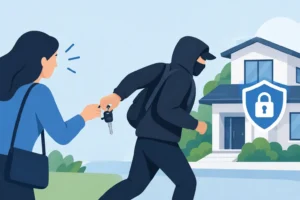
A lost key does not always mean someone will find it and identify your address. Still, the risk changes when the key was lost near your home, office, vehicle, or a document containing your address. The same is true if a purse, wallet, work bag, or key ring was stolen.
If you cannot account for a key, rekeying is the sensible precaution. It is especially urgent if the missing key had a label, company logo, access tag, or anything that connects it to your property.
For businesses, make a clear policy: keys must be returned on the final day of employment, and access should be changed promptly if a key is missing. Waiting until there is evidence of a problem leaves the door open to one.
Rekey locks when tenants, roommates, or employees change
Turnover creates access risk. Landlords should rekey between tenants, even if keys were returned. Former tenants may have made copies without telling anyone, and keys can remain with guests, service providers, or past roommates.
Homeowners should take the same approach after a roommate moves out, a relationship ends, or a household employee no longer works at the home. This is not about assuming bad intentions. It is about restoring clear control of access during a change in circumstances.
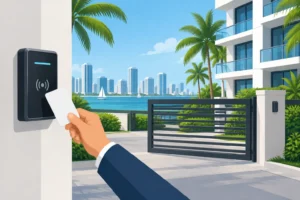
For commercial properties, the decision may involve more than the front door. Consider office suites, stockrooms, file rooms, supply closets, gates, and restricted areas. A locksmith can set up a keying plan that gives managers access to multiple areas while limiting staff access to only the spaces they need.
Rekey after a break-in or attempted break-in
After a break-in, attempted burglary, or suspicious tampering, your first priority is securing the property. Rekeying can prevent an old or copied key from being used again, but the locksmith should also inspect the entire lock and door frame.
A forced entry may bend a strike plate, damage the latch, crack the door jamb, or weaken the deadbolt. In that situation, rekeying alone may not solve the problem. Replacing damaged hardware, reinforcing the strike area, or upgrading to a higher-security deadbolt can be necessary.
If there was no forced entry, treat the event as a stronger reason to rekey. Someone may have had an unauthorized key, known a code, or found another way to gain access. Do not assume the lock is secure just because it still turns.
Consider rekeying during a security upgrade
Rekeying makes sense when you want better key control without replacing every functional lock. It is also a good time to move away from a basic keyed entry lock on a vulnerable exterior door.
Standard locks can be rekeyed, but some properties benefit from higher-security options with restricted keyways and stronger resistance to picking, drilling, or unauthorized duplication. Medeco, Mul-T-Lock, and Primus systems may be worth considering for businesses, rental portfolios, and homes with higher security needs.
The trade-off is cost and convenience. Higher-security systems generally cost more, and replacement keys may require authorization. For many customers, that extra control is exactly the point. For a low-risk interior door, a standard rekey may be all that is needed.
Do not wait for a lock to fail
A lock that works today can still be due for professional attention. Rekeying is not maintenance, but an appointment is an opportunity to identify hardware that is nearing failure. Watch for keys that catch, deadbolts that require force, loose handles, visible corrosion, or doors that have shifted and no longer align with the strike plate.
South Florida heat, humidity, salt air near the coast, and frequent use can all affect exterior hardware over time. A technician can tell you whether the lock can be serviced and rekeyed or whether replacement will be more reliable.
Rekeying versus replacing: how to decide
Rekeying is usually the right choice when the lock is compatible, in good working condition, and still meets your security needs. It is generally faster and less expensive than replacing all hardware, especially when several doors need to be addressed at once.
Replacement is the better choice when the lock is damaged, outdated, mismatched with the door, or too easy to bypass. You may also choose replacement if you want a different finish, a smart lock, a keypad, or a high-security key system.
A professional assessment matters because not all locks can be rekeyed. Some low-cost hardware is not designed for it, while others may have worn internal components that make a new lock the more dependable option.
Get your access back under control
If an old key could be in someone else’s hands, do not let uncertainty become your security plan. General Locksmith provides licensed, insured, and bonded mobile locksmith service for homes and businesses throughout Broward County and nearby South Florida communities. Call 954-243-1381 for immediate help or to schedule a rekeying appointment 24/7.
The best time to rekey is before an old key becomes a problem. A short service visit can give you new keys, a clear record of who has access, and the confidence that your doors are protecting the people and property behind them.