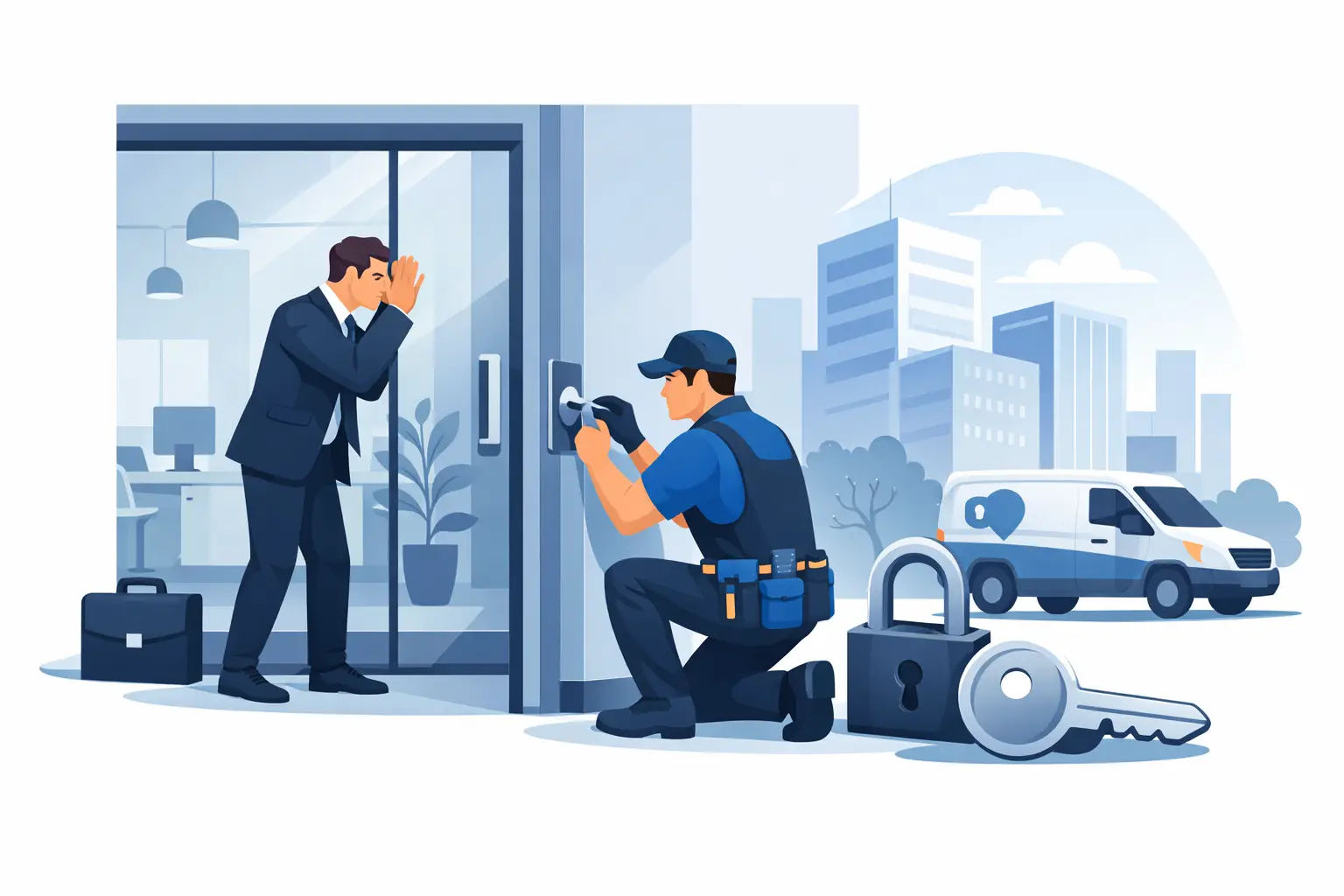

The door clicks shut, the key is sitting on a desk inside, and suddenly your whole workday stalls. When you need an office lockout locksmith, speed matters – but so does making the right call. A rushed decision can turn a simple lockout into damaged hardware, security gaps, and extra downtime your business did not plan for.
Office lockouts are not just an inconvenience. They interrupt payroll, delay customer service, keep employees standing outside, and create real stress for managers who are trying to keep operations moving. In some cases, the problem is as simple as a misplaced key. In others, it is a failed cylinder, a malfunctioning panic bar, a worn commercial lock, or an access issue tied to a master key system. The right locksmith should be able to sort that out quickly, without guessing.
When to call an office lockout locksmith
If your office door will not open and normal entry methods have failed, it is time to call a professional. That includes lost keys, broken keys, jammed deadbolts, damaged lock cylinders, keys that turn but do not retract the latch, and situations where an employee was locked out after hours with no authorized key holder available.
For commercial spaces, there is also a security side to the problem. If a key was lost off-site, stolen, or left in a public place, getting back inside is only half the issue. You also need to decide whether the existing lock is still safe to use. Sometimes a lockout call turns into a rekey on the spot, which is often the smartest move for offices that need fast access and immediate risk control.
That is where an experienced mobile locksmith makes a difference. A technician who works on commercial hardware regularly can usually tell, within minutes, whether the goal should be entry only, a repair, a rekey, or a full lock replacement.
What a professional office lockout locksmith should do on site
A proper service call starts with verification. For an office, that usually means confirming you are authorized to access the space. This protects tenants, property managers, business owners, and employees. It may feel like an extra step in a stressful moment, but it is part of professional locksmith service.
After that, the locksmith should assess the door, the lock type, and the reason for the lockout. Commercial doors are often more complicated than residential ones. You may have a storefront mortise lock, a lever handle with a commercial cylinder, a restricted keyway, an electronic lock, or a door closer that is putting pressure on the latch. Forcing entry without understanding the setup can create more damage than the original problem.
A qualified technician will usually try the least destructive method first. If the lock can be opened cleanly, that saves time and keeps your existing hardware in service. If the lock is broken internally, a repair or replacement may be necessary. If a key snapped inside the cylinder, extraction may solve the issue. If security has been compromised, rekeying may be the better call than simply opening the door.
Why office lockouts are different from home lockouts
The biggest difference is consequence. A home lockout is personal and stressful. An office lockout can affect staff, customers, deliveries, schedules, and revenue all at once. It also raises questions about who has access, whether keys were copied, and whether the current hardware still fits the level of security your business needs.
Commercial doors also tend to use heavier-duty hardware. That is a good thing for security, but it means the locksmith needs practical experience with business entry systems. A standard approach does not always work on office suites, retail storefronts, medical offices, or shared commercial buildings.
It also depends on the building. If your office is inside a larger property, the issue may involve both your suite door and the building’s exterior access rules. In some cases, a locksmith can resolve the suite lockout immediately. In others, coordination with property management is part of the job. A good commercial locksmith understands that and works efficiently without creating confusion for the tenant.
Common causes of office lockouts
Most office lockouts happen for predictable reasons. Keys get lost during a hectic day. Staff members leave with the only working key. Locks wear down from heavy use. Doors shift slightly from humidity or building movement. Electronic systems lose power or stop responding. Sometimes the problem is not the key at all – it is the door alignment, latch pressure, or a cylinder that has reached the end of its service life.
There is also the human factor. Businesses with shared access are more likely to run into trouble when key control is loose. If multiple employees use the same entry point and no one is tracking duplicates, lockout risk goes up. So does the chance that a lost key becomes a security problem instead of just an access problem.
What to expect from a 24/7 commercial locksmith
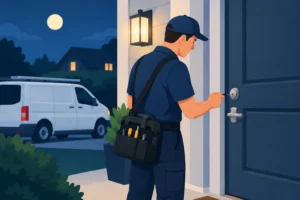
If you are calling after hours, you need a locksmith who treats your business emergency like a real priority. That means mobile service, a clear arrival window, and a technician who can handle more than basic lock picking. Businesses often need solutions on the first visit, especially if the lockout happens early in the morning, late at night, or before a busy shift.
You should also expect professionalism. That includes licensed, insured, and bonded service, straightforward communication, and pricing that is explained before the work begins. In a lockout, nobody wants to hear one price on the phone and a very different one at the door. Trust matters most when the situation is urgent.
For South Florida businesses, fast response is especially valuable because many offices operate beyond standard hours. Property managers, retail teams, cleaning crews, warehouse staff, and medical offices may all need entry outside a typical nine-to-five schedule. A locksmith who is available 24/7 is not a luxury in those situations. It is part of keeping the business running.
Office lockout locksmith service and long-term security
A lockout call is often the moment a business realizes its access setup needs work. Maybe there is only one working key. Maybe former employees were never fully removed from the system. Maybe the front office lock has been sticking for months and everyone kept working around it until it finally failed.
That is why the best office lockout locksmith service does more than open the door. It helps you decide what comes next. Sometimes the answer is a simple rekey. Sometimes it makes more sense to move to higher-security hardware with key control features that reduce unauthorized duplication. In other cases, replacing worn commercial locks saves money over repeated service calls.
There is always a trade-off. Rekeying is usually faster and more affordable when the hardware is still in good shape. Full replacement may be the smarter move if the lock is old, unreliable, or no longer matches the level of traffic and security your business needs. High-security options can cost more upfront, but they often provide better durability and tighter key control.
How to reduce the chance of another office lockout
Prevention is usually simpler than businesses expect. Start with key control. Know how many keys exist, who has them, and what happens when an employee leaves. If your office has had turnover, a recent move, or contractors coming and going, a rekey may be worth doing before there is a problem.
It also helps to pay attention to early warning signs. If a key starts sticking, if the latch catches, or if employees have to jiggle the handle every morning, the lock is already telling you something. Commercial hardware rarely fails without warning. Addressing those issues early can prevent an emergency call at the worst possible time.
For some businesses, upgrading hardware is the right next step. Restricted key systems, high-security cylinders, and better commercial-grade locks offer stronger control and better reliability. Not every office needs the same setup, though. A small private suite has different needs than a retail storefront or a multi-employee office with sensitive records.
Choosing the right locksmith for an office lockout
Not every locksmith is equally prepared for commercial work. If you need an office lockout locksmith, look for one that handles emergency service and business security, not just simple residential calls. Commercial doors, keyways, and hardware require a different level of experience.
It also makes sense to choose a company that can help beyond the immediate lockout. If the same technician can open the door, repair the issue, rekey the lock, and recommend stronger hardware when needed, you save time and avoid juggling multiple vendors. That matters when employees are waiting and business needs to resume fast.
General Locksmith provides mobile 24/7 service with licensed, insured, and bonded technicians for businesses that need quick access and dependable commercial lock support. If your office is locked down, the fastest path back to normal is getting a qualified professional on site right away.
A locked office can throw off an entire day, but it does not have to become a bigger problem. The right response is fast, careful, and focused on both access and security so you can get back inside with confidence.