
A storefront that will not lock at closing time is not a small inconvenience. It is a security problem, a liability issue, and sometimes a reason to keep staff on-site longer than planned. Commercial door lock repair matters because business locks take more abuse than residential hardware, and when something starts to fail, it rarely fixes itself.
If you manage an office, retail space, warehouse, medical practice, or multi-tenant property, the lock on your door does more than keep people out. It controls access, protects inventory, supports employee safety, and helps you stay operational. When a lock sticks, misaligns, or stops turning smoothly, it is usually an early warning that a bigger failure is coming.
Why commercial door lock repair cannot wait
A faulty commercial lock does not just create risk after hours. It can disrupt your day in ways that cost money fast. Employees may struggle to open on time, deliveries can get delayed, and customers notice when a front entry feels broken or unsafe.
There is also the issue of partial failure. Many commercial locks do not stop working all at once. They get harder to turn, the latch stops retracting cleanly, or the key works only if someone jiggles the handle just right. That gray area is where businesses lose time and make mistakes, because the door still sort of works until the day it does not.
In high-traffic environments, a bad lock can also turn into a door alignment problem, panic hardware issue, or access control headache. Repairing the lock early is often the simplest and least expensive move.
Common signs you need commercial door lock repair
Some warning signs are obvious. Others get ignored because staff adapt to them. If you hear complaints like “that door always sticks” or “you have to pull it first,” that is worth attention.
The key is hard to turn
This can point to a worn cylinder, internal debris, poor lubrication, or a key that has been copied too many times and no longer matches the pins cleanly. Sometimes the lock is fine and the door has shifted, putting pressure on the bolt. Either way, forcing the key can snap it or damage the cylinder further.
The latch or deadbolt does not line up
When a door settles or heavy use loosens the frame, the lock may stop lining up with the strike plate. That can make the lock feel broken even when the hardware itself still works. The fix may be minor, but waiting usually causes more wear on both the lock and the door.
The lock feels loose or wobbly
A loose lockset can signal stripped screws, damaged mounting hardware, or internal wear. On a commercial entry, that weakness can grow quickly because the door gets used dozens or hundreds of times a day.
Staff members are getting inconsistent results
If one person can lock the door and another cannot, the issue is not always user error. Commercial locks should be predictable. Inconsistent operation often means parts are wearing unevenly or the door is out of alignment.
The lock has been exposed to weather or attempted tampering
South Florida conditions can be rough on exterior hardware. Humidity, salt air, rain, and heat all take a toll. If a lock has visible corrosion or signs of forced entry, repair should happen right away, even if the door still opens and closes.
Repair or replace? It depends on the lock and the risk
Not every failing lock needs full replacement. In many cases, commercial door lock repair is the right move because the issue is isolated and the existing hardware is still worth keeping.
If the cylinder is worn, it may be repaired or rekeyed. If the strike is off, the door may only need adjustment. If the closer is pulling the door wrong and putting stress on the latch, addressing that related issue can restore proper lock function.
Replacement makes more sense when the lock has severe internal damage, outdated hardware, repeated failures, or poor key control. It is also worth replacing if the current lock no longer matches the level of security your business needs. A basic lock on a side door might have been acceptable years ago, but not if you now store equipment, records, medication, or high-value inventory inside.
This is where an experienced locksmith helps. A good technician does not push replacement just because it is available. They look at the condition of the lock, the door, the frame, the traffic level, and the security goal.
What causes commercial locks to fail
Commercial hardware works hard. A front office door may cycle hundreds of times per week. Add rushed employees, delivery traffic, weather exposure, and occasional forced handling, and the wear builds up fast.
One common cause is simple mechanical fatigue. Springs weaken, cylinders wear down, screws loosen, and latch components stop moving cleanly. Another is door misalignment. Even a quality lock will struggle if the door sags, the frame shifts, or the closer slams the door repeatedly.
Bad key habits also create problems. Worn copies, bent keys, and too many duplicates can shorten lock life. In some businesses, keys get passed around for years with no real control. That creates both wear and security concerns.
Then there is the bigger issue of using the wrong hardware for the job. Residential-grade locks or light-duty hardware installed on a busy commercial opening tend to fail early. The upfront savings rarely last.
Why professional repair is the safer choice
It is tempting to treat a sticking lock like a maintenance nuisance. Spray lubricant, tighten a screw, and hope for the best. Sometimes that buys a little time, but it can also mask a more serious issue.
Commercial locks are tied to life safety, access control, and insurance expectations. A repair that seems minor can affect code compliance, especially on doors with panic bars, closers, storefront hardware, or restricted access systems. If the latch is not catching correctly or the door is not securing fully, a quick DIY fix can leave the property exposed.
A licensed locksmith can diagnose whether the problem is in the cylinder, lever set, mortise body, strike alignment, closer tension, or frame condition. That matters because replacing the wrong part does not solve the root problem.
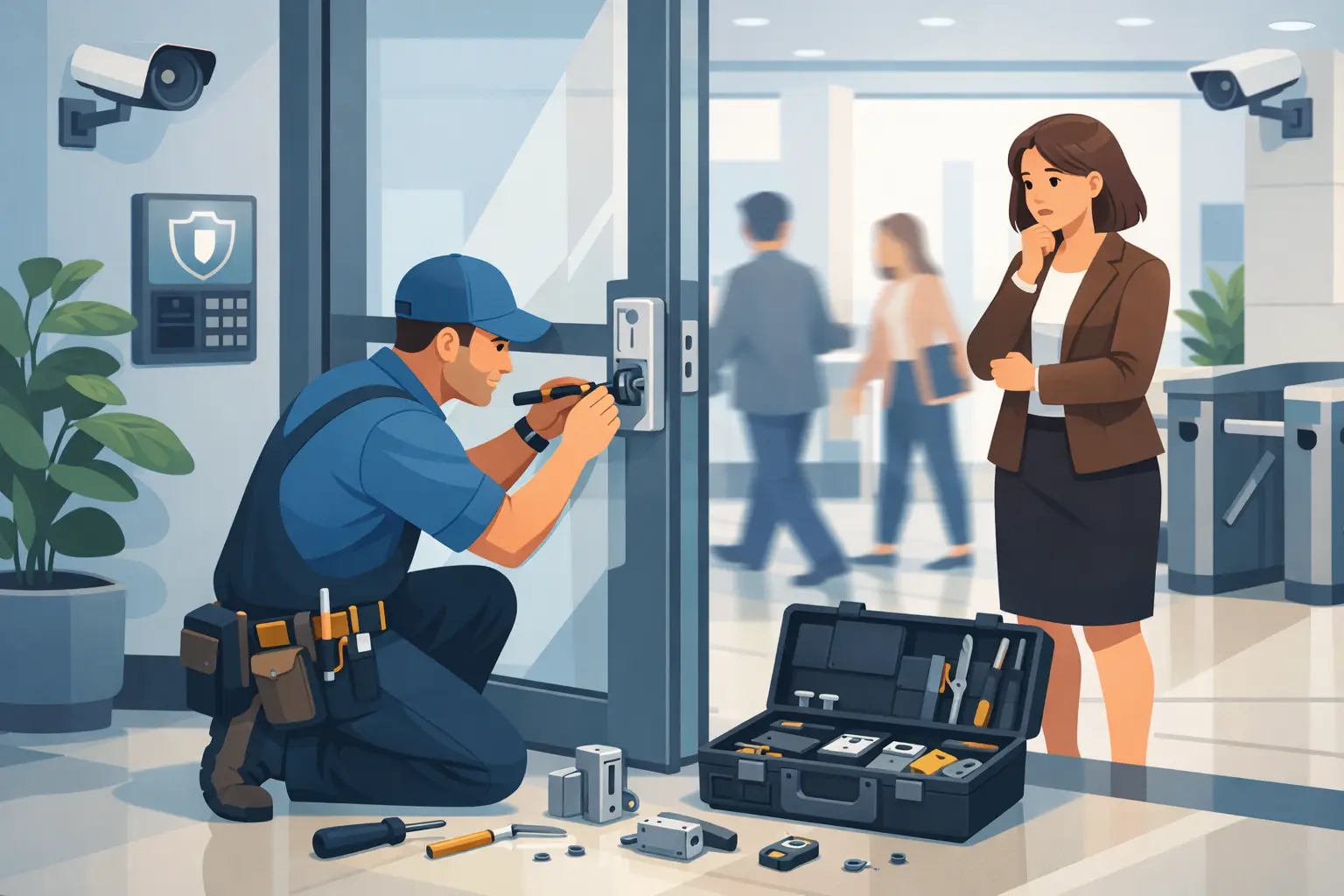
For business owners and property managers, speed matters too. A mobile locksmith can often handle the repair on-site, reduce downtime, and secure the opening without waiting days for a general repair schedule. That is especially important when the issue affects opening, closing, or employee access.
High-security locks need the right repair approach
Not all commercial locks are standard pin tumbler hardware. Many businesses use restricted key systems and higher-security products from brands like Medeco, Mul-T-Lock, and Primus. These locks offer stronger pick resistance, better key control, and more durable construction, but they also require the right tools and experience.
When a high-security lock starts acting up, the answer is not to let any handyman take it apart. Poor service can damage specialized components or create future keying problems. If your business invested in better hardware for a reason, the repair should protect that investment.
In some cases, the best path is repair and rekeying together. That is especially true after employee turnover, lost keys, or tenant changes. You restore function and tighten security at the same time.
When to call immediately
Some lock problems can wait a day. Others should not.
Call right away if your business cannot lock up securely, if a key breaks in the cylinder, if there are signs of forced entry, or if employees are getting locked in or out. The same goes for any issue affecting a main entrance, cash room, pharmacy area, server room, or shared access point in a commercial property.
If you operate in Broward, Miami-Dade, or Palm Beach and a door lock problem is threatening business hours or after-hours security, fast mobile service is often the difference between a quick fix and a costly disruption. That is where a 24/7 locksmith with commercial experience becomes more than convenient. It becomes operational support.
How to reduce future lock problems
Commercial locks do not need constant attention, but they do need some care. Periodic inspection helps catch loose hardware, alignment drift, and early wear before they turn into lockouts or security failures.
It also helps to standardize key control. Fewer unauthorized copies, better tracking of issued keys, and regular review of who has access can extend hardware life and reduce risk. If a door is getting unusually heavy use, upgrading to commercial-grade or high-security hardware may save money over repeated repairs.
One practical rule is simple: if staff members have created a “trick” to make the door work, schedule service. That workaround is usually a sign the lock is already on borrowed time.
A commercial lock should do its job quietly and consistently. When it stops doing that, the safest move is to address it before your business loses time, security, or both. If you need fast help from a licensed, insured, and bonded mobile locksmith, General Locksmith is here 24/7 at 954-243-1381.