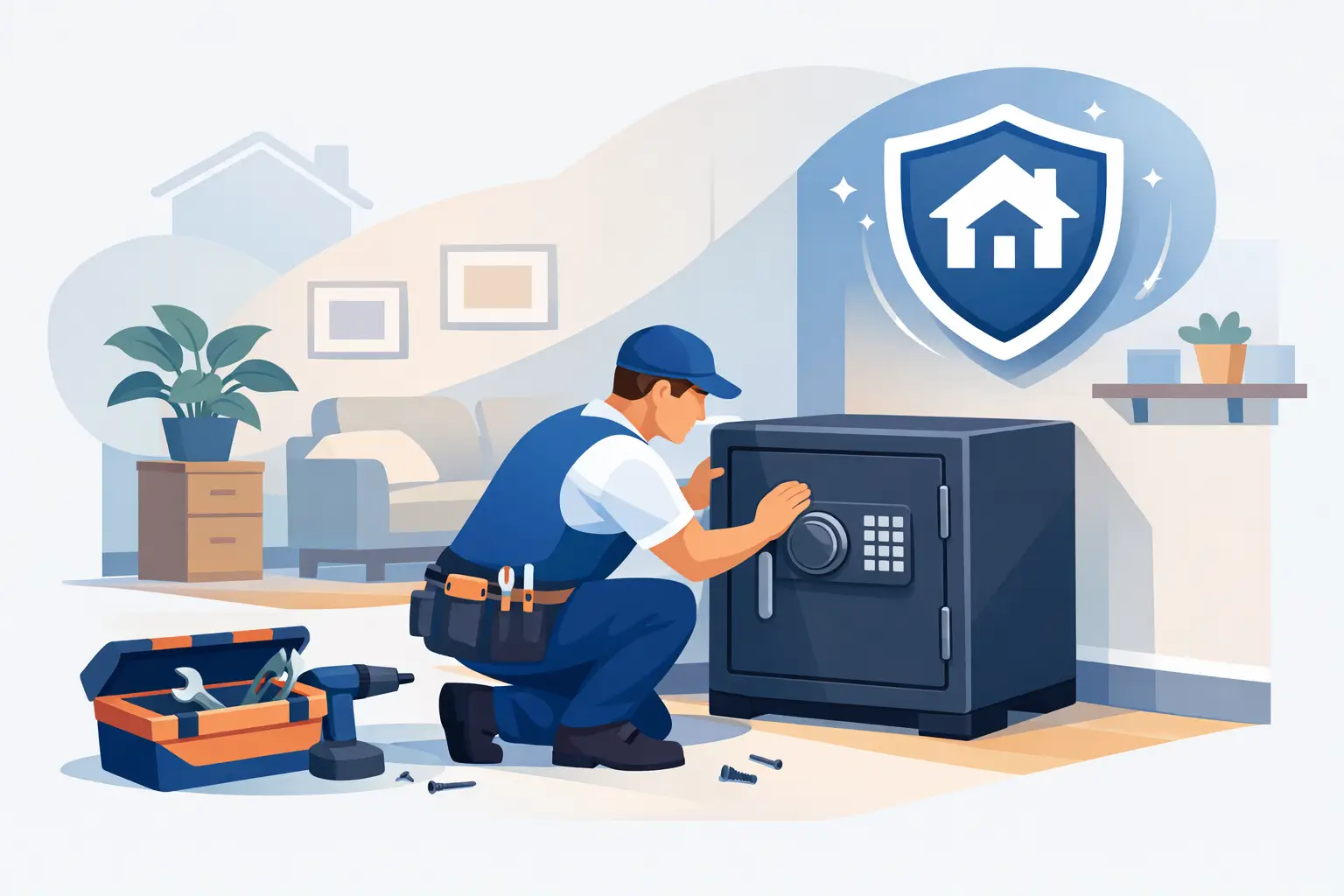

A safe that is not secured is often just a heavy box someone can carry away. A professional home safe installation service focuses on more than getting the safe through the door. The right installation considers where it belongs, what it needs to protect, how it will be anchored, and whether the location supports the safe’s weight and security rating.
For homeowners in South Florida, the details matter. A safe may hold passports, jewelry, firearms, cash, business records, family heirlooms, or backup drives with critical information. It should be difficult for an intruder to find, harder to remove, and practical for you to access when you need it.
What a Home Safe Installation Service Should Include
Safe installation starts with a conversation about what you are protecting. A compact document safe has different requirements than a burglary-rated safe, a gun safe, or a large fire-resistant model. The technician should confirm the safe’s dimensions, weight, locking method, and manufacturer anchoring instructions before recommending a location.
Placement is the first major decision. Many homeowners prefer a closet, home office, bedroom, garage, or an area near the primary bedroom. Each option has trade-offs. A bedroom closet can be convenient but may be one of the first places a burglar checks. A garage may provide a concrete floor for strong anchoring, but humidity, heat, and water exposure can be concerns. An office can offer privacy, though it may also be more visible to visitors or contractors.
The best spot is usually one that balances discretion, convenient access, and a structure strong enough to support the safe. A professional should also consider door swing, shelving, nearby plumbing or electrical lines, and whether the safe can be moved into place without damaging walls, floors, or stairs.
Proper Anchoring Is the Security Step That Counts
A freestanding safe can be tipped, pried open, or removed. Anchoring adds a critical layer of protection by securing the unit to a concrete slab, wall framing, or another approved structural surface. The correct hardware depends on the safe and the building material.
Concrete provides a strong option for many floor safes and large residential safes. In homes with wood-frame flooring or elevated structures, installation requires more evaluation. Bolting into the wrong area can damage flooring or fail to hold under force. Wall installation also requires care because studs, wiring, plumbing, and insulation may be behind the surface.
Professional installation is not about drilling as many holes as possible. It is about using the correct anchor points, appropriate fasteners, and a method that follows the safe manufacturer’s guidance. If a location cannot support safe anchoring, moving the safe to a better spot may be the smarter decision.
Choosing the Right Safe for the Job
A safe should match the items inside it. Fire resistance, water resistance, burglary protection, and capacity are separate considerations. A safe that protects paper documents from heat may not provide the level of forced-entry protection needed for jewelry, cash, or valuables. Likewise, a small home safe may be easy to conceal but may not have room for larger records, valuables, or firearms.
Before scheduling installation, think about the items you need to secure now and what you may store later. Many people buy a safe that fits their current needs, only to outgrow it after adding legal documents, keepsakes, or business paperwork. It is often more practical to choose a slightly larger safe than to replace and reinstall one within a year or two.
Electronic keypad locks are popular because they are fast to use and eliminate the need to carry a key every day. They also require battery maintenance and a plan for emergency access. Mechanical combination locks have fewer electronic components but take more time to operate. Some safes use dual locks, requiring both a key and a code. The right choice depends on who needs access and how often the safe will be opened.
If firearms are involved, access speed and responsible storage must both be considered. A quick-access safe may suit a specific defensive purpose, while a larger gun safe may be better for long-term storage. Make sure the safe is installed according to its intended use and all applicable safety requirements.
Avoid Common Safe Placement Mistakes
The most obvious location is not always the safest one. A large safe placed in plain view can signal that valuables are inside. On the other hand, hiding a safe in a place that is too difficult to reach can lead to missed battery changes, forgotten combinations, or frustration during an emergency.
Avoid installing a safe in an area prone to moisture, flooding, or extreme temperature changes unless the model is designed for those conditions. South Florida homes can face heavy rain, storm-related water intrusion, and high humidity. A garage, utility room, or low-lying storage area may look convenient but could expose contents to moisture. Sensitive documents, electronics, and jewelry may need additional protective storage inside the safe.
Another mistake is placing a heavy safe on an upper floor without checking the structure. Large safes can weigh several hundred pounds before anything is stored inside. The path to the installation location matters too. Tight stairwells, fragile tile, narrow hallways, and sharp turns can complicate delivery and positioning. Planning prevents damage and keeps the installation controlled.
Do not rely on a closet shelf, loose furniture, or a drywall-only mount for a safe that requires structural anchoring. These shortcuts can create a false sense of security. The safe should be installed where it can perform as designed.
What to Prepare Before Installation
Clear the path from the entrance to the planned installation area. Remove rugs, boxes, furniture, and anything that could create a trip hazard. If the safe is going into a closet, clear enough space for the door to open fully and for the technician to work around the unit.
Have the safe model information available if you already purchased it. The manufacturer’s dimensions, weight, bolt-down instructions, and lock type can help determine whether the intended location is suitable. If you have not selected a safe yet, it helps to know what you want to protect, your preferred access method, and any space limitations.
You should also decide who will know the combination, where backup keys will be stored, and how you will document the safe’s serial number. Keep the combination and backup key separate from the safe itself. A key hidden in the same room defeats much of the purpose.
After the Safe Is Installed
Once the safe is anchored, test it several times while the door is open. Confirm that the lock operates correctly, the bolts extend and retract as intended, and all authorized users understand the access process. For electronic locks, record the battery type and establish a simple replacement schedule. Waiting for the keypad to fail is an avoidable problem.
Review your storage approach as well. Important documents can be organized in labeled folders, while jewelry and smaller valuables may benefit from interior containers that prevent scratches. If you are storing digital backups, verify that the device and storage media are appropriate for the safe’s fire and moisture environment.
A safe is only one part of home security. Strong exterior locks, protected entry points, good lighting, and controlled key access all reduce the chances of someone reaching the safe in the first place. For higher-value property, it may make sense to pair a safe installation with a broader residential security assessment.
When your valuables need more protection than a drawer or filing cabinet can provide, choose placement and anchoring carefully. General Locksmith can help homeowners in Broward County and nearby South Florida communities install a home safe with security, access, and discretion in mind. Call 954-243-1381 to schedule service or get help 24/7.