
A handle that wiggles, sags, or turns without opening the door is more than an annoyance. If you need to fix loose door handle hardware, acting early can prevent a damaged latch, an unexpected lockout, or a door that no longer secures properly. Most loose handles have a straightforward cause, but the right repair depends on the handle style and whether the issue is in the trim, spindle, latch, or lock itself.
Before you start tightening screws, take a minute to see how the handle is behaving. A handle that feels loose but still opens the door needs a different repair than one that spins freely, droops downward, or leaves the latch stuck inside the door.
Why Door Handles Come Loose
Daily use is the usual reason. Each turn of a knob or lever puts pressure on small mounting screws, the spindle that connects both sides of the handle, and the internal spring mechanism. Over time, screws can back out, parts can shift, and less durable hardware can wear down.
South Florida humidity can also contribute to the problem. Exterior hardware may corrode, especially near the coast, while wood doors can swell or shift with moisture changes. When the door no longer aligns cleanly with the strike plate, people often force the handle or push hard to latch the door. That extra pressure can loosen the hardware faster.
A loose handle may also point to a security concern. If the exterior trim can be pulled away from the door, the lock assembly may not be mounted firmly enough to resist tampering. This is particularly important on entry doors, office doors, rental properties, and doors that lead to garages or storage areas.
How to Fix Loose Door Handle Hardware
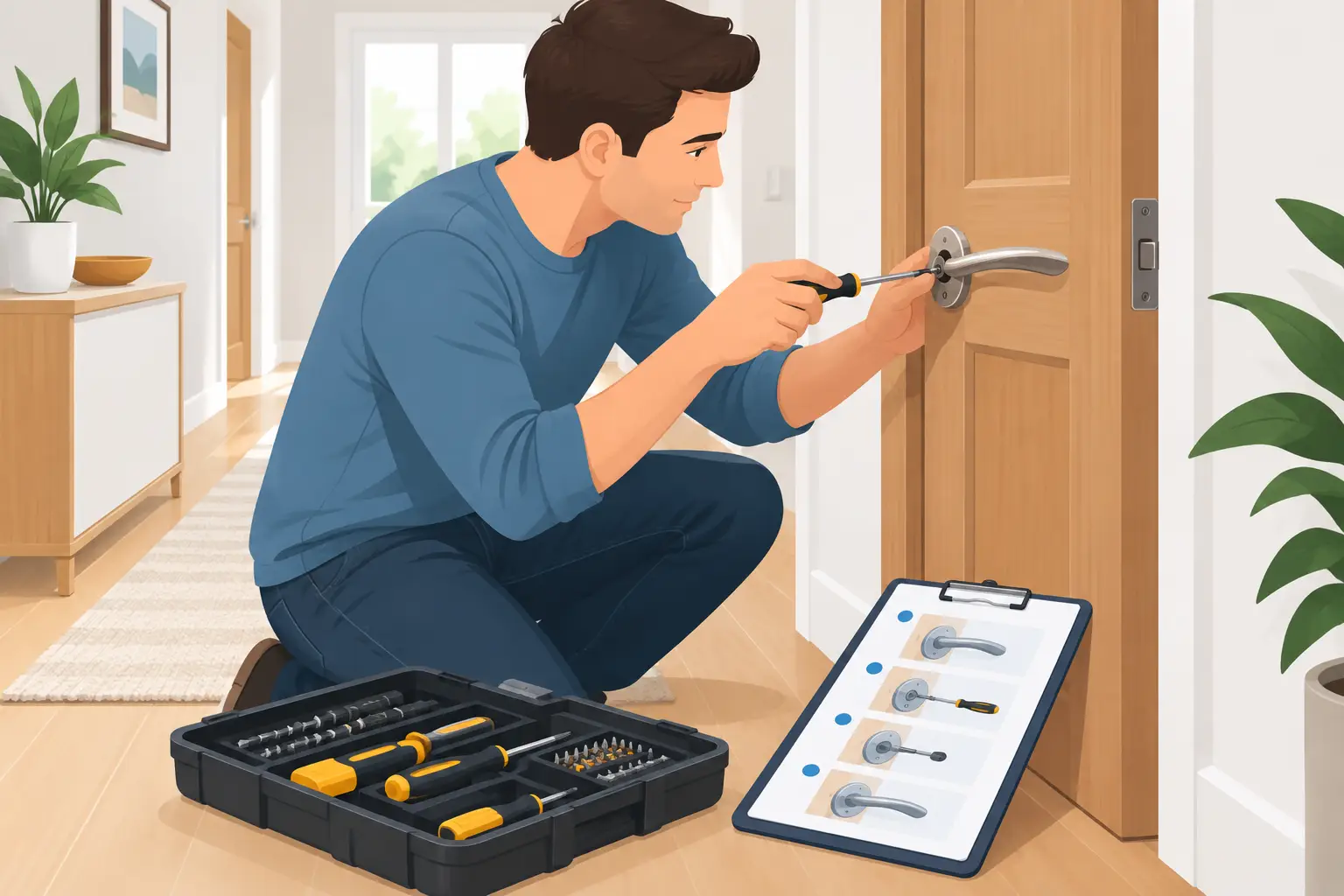
Start with the door open. This lets you test the latch safely and prevents you from accidentally locking yourself out while parts are removed. Keep a Phillips-head screwdriver, a small flathead screwdriver, and possibly a hex key nearby. Many lever handles use a small set screw that requires an Allen wrench rather than a standard screwdriver.
1. Identify the type of handle
Look for visible screws on the round plate or rectangular trim at the base of the handle. If you see them, you likely have an exposed-screw handle. Tightening those screws may solve the problem in minutes.
If there are no visible screws, the handle probably has a decorative cover plate. Some covers twist off by hand, while others have a narrow slot that lets you gently release the plate with a flathead screwdriver. Avoid prying hard against the door finish. If the cover will not move easily, inspect it closely for a concealed release tab or set screw.
2. Tighten the handle’s set screw
Many lever handles have a small screw on the underside or side of the lever. This screw holds the lever to a square metal spindle. When it loosens, the lever may wobble, sag, or come off completely even though the rest of the lock looks secure.
Insert the correctly sized hex key and tighten the set screw until the lever is firm. Do not overtighten it. Small set screws can strip, especially on older or lower-grade hardware. Test the lever several times after tightening. It should return to its normal horizontal position and operate the latch without slipping.
3. Secure the mounting screws behind the trim
For a knob or lever with a loose base plate, remove the decorative cover if necessary and locate the two long mounting screws. These screws pass through the door and connect the inside and outside sections of the lockset.
Tighten each screw gradually, alternating from one side to the other. This keeps the hardware centered and prevents one side from pulling too tightly before the other is aligned. The trim should sit flush against the door, but the handle should still turn smoothly. If the handle binds after tightening, back each screw off slightly and test again.
4. Check the spindle and latch connection
If the handle turns but does not pull back the latch, the spindle may be out of place, worn, or broken. Remove the handle and inspect the square spindle. It should fit securely through the latch mechanism, with both handles seated correctly on either side.
A cracked spindle or a stripped internal hub generally cannot be fixed by tightening screws. Replacing the handle set is usually the practical option. On higher-security locks or commercial hardware, the internal components may be serviceable, but disassembly should be handled carefully to avoid affecting the lock cylinder or exit function.
5. Test the latch with the door open
Turn the handle slowly and watch the latch bolt at the edge of the door. It should retract fully and spring back when you release the handle. If it sticks, moves slowly, or fails to extend, the latch may be worn or dirty.
Do not spray heavy oil into the lock or latch. Oil can collect dirt and create a larger problem later. A locksmith-grade dry lubricant is the better choice for moving lock components, but a broken or weak latch spring often requires latch replacement rather than lubrication.
6. Check door alignment before blaming the handle
Close the door gently and see whether the latch enters the strike plate without force. If you need to lift, pull, or shove the door to make it latch, the issue may be alignment rather than the handle itself. Loose hinges, a shifted strike plate, or a swollen door can put repeated strain on the latch and handle.
Tightening hinge screws may help if they are loose. If the strike plate is visibly misaligned, it may need to be adjusted. Be cautious about enlarging strike plate holes or filing metal parts without confirming the real cause. A rushed adjustment can weaken the door frame or leave the latch only partially engaged.
When a Loose Handle Needs a Locksmith
A basic interior privacy handle is often an easy do-it-yourself repair. Entry door hardware deserves more caution because it is connected to your home or business security. Call a professional when the lock cylinder turns with the handle, the deadbolt no longer lines up correctly, the latch is broken inside the door, or the outside trim is loose enough to pull away.
You should also avoid taking apart smart locks, mortise locks, commercial lever sets, panic hardware, and high-security cylinders unless you know the specific model. These systems may contain electrical connections, timed functions, restricted key components, or parts that must be reassembled precisely. Saving a few minutes on a repair is not worth compromising a working security system.
For landlords and property managers, a loose handle between tenants is a good reason to inspect the entire entry door. Check the deadbolt, strike plate screws, hinge condition, door closer, and key control at the same time. A handle repair can reveal that the door has been under strain for months.
Signs It Is Time to Replace the Hardware
Tightening hardware is worthwhile when the parts are intact and the handle works normally once secured. Replacement is often the safer choice when the lever keeps coming loose, the latch sticks after adjustment, the finish is heavily corroded, or the mounting holes in the door are damaged.
Consider an upgrade if the current lockset is lightweight, old, or installed on a main exterior door. A properly installed deadbolt and quality lever or knob can improve daily reliability as well as security. For businesses and high-traffic doors, commercial-grade hardware is designed to hold up better against constant use.
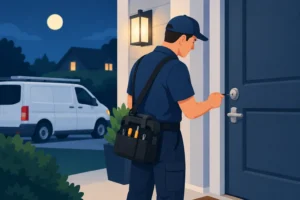
General Locksmith provides mobile residential and commercial lock repair throughout Broward County and surrounding South Florida communities. Our licensed, insured, and bonded technicians can diagnose whether a loose handle needs tightening, repair, replacement, or a security upgrade. For urgent help or scheduled service, call 954-243-1381. We are here 24/7, including weekends and holidays.
A door handle should feel solid every time you use it. If yours still shifts, sticks, or fails to latch after a careful adjustment, leave the door unlocked only if it is safe to do so and arrange a professional repair before a small hardware issue becomes a security problem or a lockout.