

A locked front door can look secure while still relying on an older cylinder that was never designed to resist modern bypass methods. So, what is lock bumping protection? It is a set of lock features and security upgrades designed to help prevent a specially cut key from manipulating the pins inside a standard pin-tumbler lock.
For homeowners, property managers, and business owners, the issue is not about creating fear. It is about knowing whether the hardware on your door matches the level of protection you expect from it. A professional locksmith can inspect your current locks, explain the practical risks, and recommend an upgrade that fits your property and budget.
How Lock Bumping Works at a Basic Level
Many residential and commercial doors use pin-tumbler cylinders. Inside the lock are small pins that must line up correctly before the plug can turn and the door can open. A legitimate key positions those pins at the proper height.
Lock bumping attempts to use a specially prepared key and a quick impact to make the pins briefly jump into alignment. When it succeeds, the lock may turn without the key that was originally issued for that door. The method is associated with basic, older, or lower-security pin-tumbler cylinders that lack specific anti-bump features.
The concern is that a bumped lock may show little or no obvious exterior damage. That can make it harder for a property owner to recognize a security problem after the fact. It is also why simply checking that a door is locked is not always enough when evaluating entry security.
Not every lock is equally vulnerable, and not every attempted bumping incident succeeds. Lock condition, cylinder design, installation quality, and the attacker’s experience all affect the outcome. Still, a standard lock that has been in place for years may not provide the protection expected from a primary entry door.
What Is Lock Bumping Protection?
Lock bumping protection refers to design features that make it much harder for the pins inside a cylinder to align through impact. Instead of using only traditional pin stacks, an anti-bump lock may include specially shaped pins, additional mechanisms, tighter tolerances, and restricted keyways.
These features disrupt the brief pin movement that bumping depends on. Some high-security cylinders also use more than one locking element, such as sidebars or rotating components, so aligning the standard pins alone is not enough to operate the lock.
This does not mean any lock is completely invulnerable. Security is about slowing down unauthorized entry, increasing the skill and time required, and making forced or covert entry less likely to go unnoticed. The right lock is one part of a broader door-security plan.
A quality deadbolt with bump-resistant hardware can be a meaningful improvement, especially when paired with a solid door, reinforced strike plate, long mounting screws, and properly aligned hardware. If the frame is weak or the deadbolt does not fully engage, even an excellent cylinder cannot deliver its full value.
Signs Your Property May Need an Upgrade
A lock does not have to be broken before it is worth replacing. If you recently moved into a home, took over a commercial suite, lost track of who has keys, or experienced a tenant turnover, rekeying or upgrading the locks is a sensible first step.
Older locks may also be due for an evaluation if they feel loose, stick when turning, use widely available key blanks, or have no identifiable security rating or anti-bump designation. Wear can affect both daily reliability and the lock’s resistance to manipulation.
For businesses, the need is often bigger than the front door. Storage rooms, side entrances, employee-only areas, and rear exits can be overlooked even though they may offer less visibility and less durable hardware. A property manager may benefit from a keyed-alike system for convenience, but sensitive areas may need restricted keys or separate access control.
If your door uses a knob lock as its only security, an upgrade deserves prompt attention. Knob locks are not a substitute for a properly installed deadbolt on an exterior residential door. Commercial doors may require a different solution, such as a high-security mortise cylinder, exit hardware, or an access-control system that suits the building’s use and code requirements.
Anti-Bump Locks and High-Security Cylinders
There are several ways to improve bump resistance, and the best option depends on the door, existing hardware, and your security priorities.
A bump-resistant residential deadbolt is often the practical starting point for a home. It can provide better pin design and stronger overall construction without requiring a major change to the door. This option may work well for a homeowner who wants reliable everyday security at a reasonable cost.
High-security cylinders offer a greater level of protection. Brands such as Medeco, Mul-T-Lock, and Primus are known for systems that may include advanced pin configurations, sidebars, restricted keyways, and controlled key duplication. These options can be especially valuable for businesses, rental properties, high-value homes, and doors where unauthorized key copying is a concern.
Restricted keys are worth understanding. With an ordinary key system, copies can often be made at many hardware stores or kiosks. A restricted key system gives the property owner more control over who can authorize duplicates. That does not replace good key management, but it adds an important layer of accountability.
The trade-off is cost and convenience. High-security hardware generally costs more than a standard deadbolt, and replacement keys may need to be ordered through an authorized locksmith. For many properties, that added control is a benefit. For a low-risk interior closet, it may be more protection than necessary.
Installation Matters as Much as the Lock
Even the right cylinder can underperform if it is installed poorly. A deadbolt that is misaligned, a strike plate secured only with short screws, or a warped door can create gaps and weaknesses that have nothing to do with bumping.
A locksmith should check how the bolt enters the frame, whether the door closes smoothly, and whether the strike area is reinforced. On a wood-frame door, longer screws anchored into the structural framing can make a significant difference. On commercial aluminum, glass, or metal doors, the correct hardware and mounting approach are equally important.
Avoid assuming that a package label tells the whole story. Some products advertise security features broadly, while the actual protection depends on the model, the cylinder included, and whether it is suitable for your door. A professional assessment helps separate a meaningful upgrade from a cosmetic one.
A Smart Security Plan for Homes and Businesses
Lock bumping protection works best as part of layered security. Exterior lighting, visible cameras, door viewers, alarms, access logs, and good key control can all support stronger physical locks. The goal is not to turn a home or business into a fortress. It is to remove easy opportunities and make sure the property is prepared for its real-world risks.
For a home, start with the exterior doors that are used every day and the doors that are hidden from street view. For a business, start with public entrances, employee access points, offices containing records or cash, and back doors. Then consider who currently has keys and whether the lock system gives you enough control.
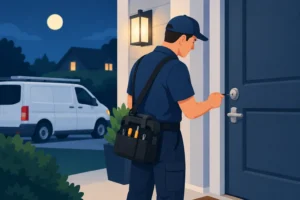
General Locksmith provides mobile lock inspections, rekeying, lock repair, and high-security lock upgrades across Broward County and surrounding South Florida communities. Licensed, insured, and bonded technicians can help you choose a practical option rather than selling security hardware you do not need.
If you are unsure what is on your door now, do not wait for a lost key, break-in, or malfunction to force the decision. Call General Locksmith at 954-243-1381 for 24/7 assistance or to schedule a professional security evaluation. A few minutes spent checking your locks can bring far more confidence every time you close the door behind you.