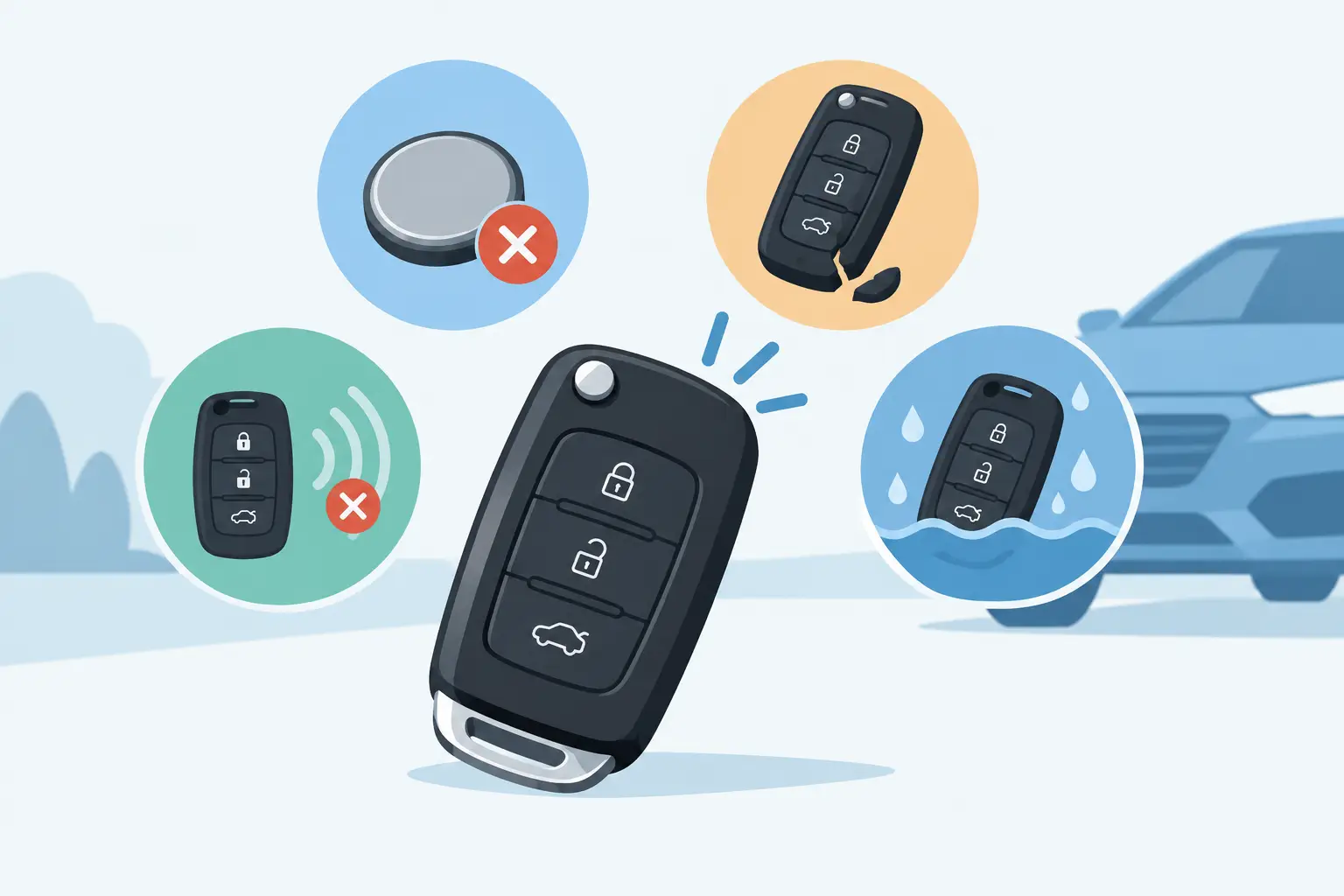

A car key can fail at the worst possible moment: outside your office, in a parking lot after dark, or when you are already late for an appointment. So, what causes car key failure? The answer depends on the type of key and the vehicle, but most failures come down to physical wear, battery trouble, electronic damage, programming issues, or a problem inside the vehicle rather than the key itself.
The good news is that many warning signs appear before a key stops working completely. Paying attention to them can help you avoid a stressful lockout and make the right call when a replacement or repair is needed.
What Causes Car Key Failure in Modern Vehicles?
Today’s car keys do more than turn a lock. A traditional metal key must match the lock and ignition precisely. A transponder key contains a chip that communicates with the vehicle’s immobilizer system. A remote key fob sends a wireless signal to lock, unlock, and sometimes start the vehicle. Smart keys add proximity sensors and push-button start capability.
That convenience creates more possible failure points. If your key will not unlock the door, start the engine, or work consistently, avoid assuming it is only a dead battery. The source may be the key, the ignition, the vehicle battery, a damaged door lock, or the vehicle’s security system.
Wear on the Key Blade
Metal keys wear down gradually. Each time the key enters a door lock or ignition cylinder, the ridges and cuts rub against internal pins. Over years of use, those precise edges can become rounded or uneven.
A worn key may still work occasionally, especially in one door or when turned a certain way. That inconsistency is a warning sign, not a reason to keep forcing it. A key that sticks, requires wiggling, or only turns after several attempts can eventually stop working altogether.
Keys can also bend or crack after being used to pry something open, carried loose with heavy items, or twisted aggressively in a stiff lock. Even a small bend can prevent proper alignment inside the ignition or door lock.
A Weak or Dead Key Fob Battery
A low fob battery is one of the most common and easiest-to-fix causes of remote key failure. The usual signs are reduced operating range, needing to press buttons multiple times, or the remote working only when held close to the vehicle.
Heat can shorten battery life, which matters in South Florida where key fobs are often left in hot vehicles, bags, or direct sunlight. Water exposure can also corrode the battery contacts. Replacing the battery may restore the remote, but it will not fix a damaged circuit board, broken buttons, or lost programming.
Many smart-key vehicles still have an emergency metal key hidden inside the fob. That key may unlock the driver’s door, but it may not start the vehicle if the electronic portion of the fob is not detected.
Damaged Transponder Chip or Internal Electronics
A transponder chip is a small electronic component inside a key. When you turn the key or place a smart fob near the start button, the vehicle reads the chip and decides whether to allow the engine to start. If the chip is damaged, missing, or no longer programmed to the vehicle, the engine may crank but not start.
Dropping a key can damage internal components even when the outer shell looks fine. Water damage is another frequent issue. A key fob that goes through a washing machine, falls into a pool, or gets soaked in heavy rain may work temporarily and fail later as corrosion develops.
If the remote buttons still lock and unlock the car but the engine will not start, a transponder or programming issue is possible. If the engine starts but the remote does nothing, the fob battery, buttons, or remote circuit may be the problem instead.
Broken Buttons and Worn Key Fob Housings
Key fob buttons are used thousands of times. Rubber pads wear thin, plastic housings crack, and tiny internal switches can break loose. You may notice that one function stops working first, such as the trunk release or unlock button, while the other buttons continue to work.
Do not tape a separating fob shell together and ignore it indefinitely. Once the case no longer protects the circuit board, moisture, dirt, and impact can turn a simple housing repair into a full replacement. A qualified automotive locksmith can often determine whether the fob needs a new shell, a battery, electronic repair, or complete replacement.
The Car May Be the Real Problem
A key is often blamed because it is the part you can see and hold. But the vehicle itself can cause the same symptoms.
Ignition Cylinder Wear or Damage
On vehicles with a traditional ignition, the ignition cylinder can become worn, dirty, or damaged. If several keys have trouble turning in the ignition, or the key works in the door but not the ignition, the cylinder may be the issue.
Forcing the key can make the damage worse. A broken key inside an ignition is not only inconvenient – it can turn a manageable repair into a more involved service call. Stop applying pressure if the key will not rotate normally.
Door Lock Problems
A key that will not unlock a door may be dealing with a seized or damaged lock rather than a bad key. Dirt, corrosion, lack of lubrication, attempted break-ins, and worn internal components can all affect a door cylinder.
This is particularly common on vehicles where drivers rely on the remote every day and rarely use the mechanical door lock. When the fob battery dies, the hidden mechanical key may reveal a lock that has not been operated in years.
Vehicle Battery or Electrical Failure
If neither your key fob nor your interior power locks respond, a dead vehicle battery may be the real issue. The fob can be working perfectly while the car has no power to receive or act on the signal.
Some vehicles display a “key not detected” message when the car battery is weak or when an electrical fault affects the keyless-entry system. Before replacing an expensive smart key, have the vehicle battery and charging system considered as part of the diagnosis.
Programming and Security System Issues
Replacement keys must be cut correctly and, on many vehicles, programmed correctly. A key can look identical to the original yet fail to start the car if its chip has not been paired with the vehicle’s immobilizer system.
Programming can also be lost or disrupted after certain electrical repairs, module replacements, or battery-related issues. The exact process varies by make, model, and year. That is why a properly equipped automotive locksmith verifies both the mechanical cut and the electronic function before treating a new key as complete.
What to Do When Your Car Key Stops Working
Start with the least complicated check. If you have a spare key, try it. When the spare works, the vehicle is probably not the main problem. If you use a remote or smart key, replace the fob battery with the correct type and make sure it is installed in the proper direction.
Next, look for patterns. Does the key unlock the door but not start the vehicle? Does it work only at close range? Does it turn in one lock but not another? Those details help identify whether you are facing a fob issue, worn blade, ignition problem, or programming failure.
Avoid forcing the key into the lock or ignition, striking the fob, or attempting to pry open electronic components with tools that can damage the circuit board. A quick DIY attempt may seem practical, but it can leave you with a broken key, damaged ignition, or a fob that cannot be repaired.
If you are locked out, your key is stuck, or the vehicle will not recognize a working-looking key, professional mobile service is the safer option. A licensed automotive locksmith can cut replacement keys, program many transponder and smart keys, extract broken keys, and assess lock or ignition issues on-site.
How to Reduce the Chance of Key Failure
Car keys last longer when they are treated as electronics and precision tools, not as general-purpose items on a keychain. Keep fobs dry, replace weak batteries promptly, and use a protective case if the fob is frequently dropped. Avoid hanging a heavy collection of keys from a traditional ignition key, since extra weight can contribute to wear over time.
It is also wise to have a tested spare before your only working key becomes unreliable. A spare that has been cut and programmed in advance is usually less stressful and more convenient than arranging a replacement during an emergency.
If you are in Broward County, Miami-Dade, or Palm Beach County and your vehicle key has failed, General Locksmith can provide mobile automotive locksmith assistance 24/7. Call 954-243-1381 for prompt help with a lockout, replacement key, key fob, or ignition-related concern. Acting when the first warning signs appear can keep a small key problem from becoming a stranded-car problem.