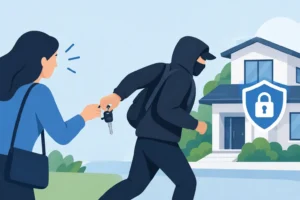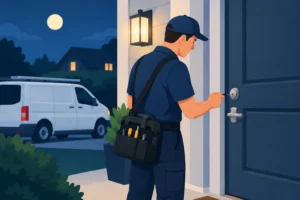

A locked door rarely happens at a convenient time. It may be late at night outside your home, during a busy workday at your office, or in a parking lot with your keys sitting inside the car. This mobile locksmith service guide explains what a mobile technician can do, what a professional visit should look like, and how to get help without adding more stress to an already difficult moment.
What a Mobile Locksmith Service Can Handle
A mobile locksmith brings the tools, key-cutting equipment, replacement hardware, and technical experience to your location. Instead of towing a vehicle, removing a lock yourself, or waiting until a shop opens, you can have a trained technician come to your home, business, or roadside location.
For urgent situations, that often means restoring access after a house, office, or vehicle lockout. A qualified locksmith can also repair damaged locks, replace lost keys, rekey existing locks, install new deadbolts, and address problems with car keys, ignitions, key fobs, and transponder systems.
The right service is not limited to emergencies. Mobile locksmiths are also practical partners for property managers turning over a rental unit, homeowners who have moved into a new property, and business owners who need better control over who has keys. The work may be immediate, but the goal should always be lasting security.
When to Call a Mobile Locksmith
Call for mobile service when access, safety, or security cannot wait. A lockout is the most obvious reason, but there are other situations where delaying the repair can create a bigger problem.
If a key breaks in a lock, a deadbolt will not turn, a door will not latch correctly, or a damaged lock leaves a property exposed, prompt service protects both the building and the people inside. After a break-in attempt, do not assume a door is secure simply because it closes. The strike plate, frame, cylinder, and latch may all need inspection.
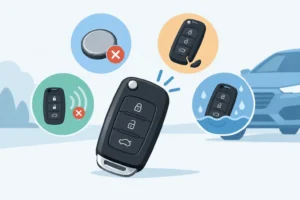
Drivers should call when they are locked out, have lost a car key, need a replacement key fob, or are dealing with a key that will not turn in the ignition. Modern vehicle keys can require programming, so the solution depends on the make, model, and year of the vehicle. A basic mechanical key and a proximity smart key are very different jobs.
For businesses, a mobile visit is useful when an employee leaves with keys, a lock fails before opening time, or a restricted area needs new access control. Rekeying is often faster and less expensive than replacing every lock, provided the existing hardware is in good condition and compatible with the new key configuration.
What to Expect During the Service Visit
A professional locksmith should begin by confirming the service need and assessing the lock, key, or door condition. For a lockout, the technician should use methods intended to preserve the existing hardware whenever possible. Drilling or replacing a lock may be necessary in certain cases, but it should not be the automatic first option.
You should also expect identification and ownership verification when circumstances require it. This protects property owners and helps prevent unauthorized access. Be prepared to show a photo ID, vehicle registration, lease information, or another reasonable form of proof once access is restored if your identification is inside.
Before work starts, ask for a clear explanation of the recommended solution and the price. Emergency work can vary based on the lock type, vehicle system, parts required, and complexity of the job. A trustworthy provider explains those variables rather than making vague promises or adding unexplained charges afterward.
For scheduled security work, the technician may inspect the door alignment, frame strength, hinges, existing lock grade, and key control needs. A quality deadbolt on a weak door frame is not enough. Security is a system, and the door itself matters as much as the lock installed on it.
How to Choose a Locksmith You Can Trust
During an emergency, it is tempting to call the first number that appears in a search. A few quick checks can help you choose a provider that will treat your property carefully and charge fairly.
Start with credentials. Look for a locksmith that is licensed, insured, and bonded, with clearly identified technicians and a real local service presence. These details are not just marketing language. They provide accountability when someone is working on your home, vehicle, or business security.
Ask whether the company provides a price range before dispatch and whether there are extra charges for nights, weekends, holidays, mileage, or service calls. The exact total may depend on what the technician finds, especially with damaged locks or advanced car keys, but you should understand the pricing structure before authorizing work.
Experience with your specific need also matters. A technician who handles residential lockouts may not be equipped for a commercial restricted key system or a late-model European vehicle key. Explain the situation clearly when you call, including the location, lock type if known, and whether the issue is a lockout, broken key, lost key, or security upgrade.
Avoid anyone who insists on drilling immediately without examining the lock, refuses to identify the company, or cannot explain the charge. Fast service should not mean rushed decisions. You deserve a clear answer before work begins.
Residential Security: Repair, Rekey, or Replace?
After moving into a home, rekeying is usually one of the smartest first steps. You do not know how many copies of the previous key may still be in circulation. Rekeying changes the internal pin configuration so old keys no longer work while allowing you to keep compatible lock hardware.
Replacement makes more sense when locks are worn, damaged, low quality, or no longer appropriate for the door. A locksmith may recommend a stronger deadbolt, reinforced strike plate, upgraded door hardware, or a high-security cylinder for exterior entry points. Products from established high-security lines such as Medeco, Mul-T-Lock, and Primus can offer stronger resistance to unauthorized key duplication and common forced-entry methods, depending on the product and installation.
There is a trade-off. High-security hardware costs more than standard residential locks, and specialized keys can be less convenient to duplicate. For many homeowners, that added key control is exactly the point. The best choice depends on your neighborhood, door condition, number of people who need access, and how much control you want over spare keys.
Commercial Locksmith Needs Require More Planning
Businesses need access that is convenient for authorized employees but controlled enough to protect inventory, records, equipment, and customer information. One key for every door may be easy, but it creates a serious problem when that key is lost or an employee leaves.
A master key system can give management access across the property while limiting employee keys to designated rooms or doors. It requires careful planning, accurate records, and hardware that supports the system. For a small office, simple rekeying and better key tracking may be sufficient. For a multi-unit property, retail space, or facility with sensitive areas, higher-security cylinders and structured access levels may be worth the investment.
Do not overlook doors that are used daily. A door that drags, fails to close, or has a loose strike plate can defeat an otherwise good lock. Routine repair prevents lockouts and makes the property harder to compromise.
What to Do While You Wait for Help
Stay in a safe, visible place, particularly during a vehicle lockout or after dark. If a child, pet, vulnerable adult, or anyone in medical distress is locked inside a vehicle or building, call emergency services first. A locksmith can assist with access, but immediate danger requires the fastest appropriate response.
Do not force the door, pry a window, or use improvised tools on a vehicle. Those attempts can damage weather stripping, airbags, window mechanisms, locks, and door frames. They can also turn a straightforward service call into a larger repair bill.
When you call, provide your exact location, the type of property or vehicle, and any relevant details. For example, tell the dispatcher if you have a key broken in the lock, a smart key that is missing, a commercial door that will not secure, or a child locked inside. Clear information helps send the right technician and equipment.
General Locksmith provides 24/7 mobile support for residential, commercial, and automotive needs throughout Broward County and surrounding South Florida communities. For immediate assistance or to schedule service, call 954-243-1381. There are no extra charges for weekends or holidays.
A good locksmith visit should leave you with more than access to a door or vehicle. It should leave you confident that the lock works properly, the key situation is under control, and the next unexpected problem will be easier to handle.