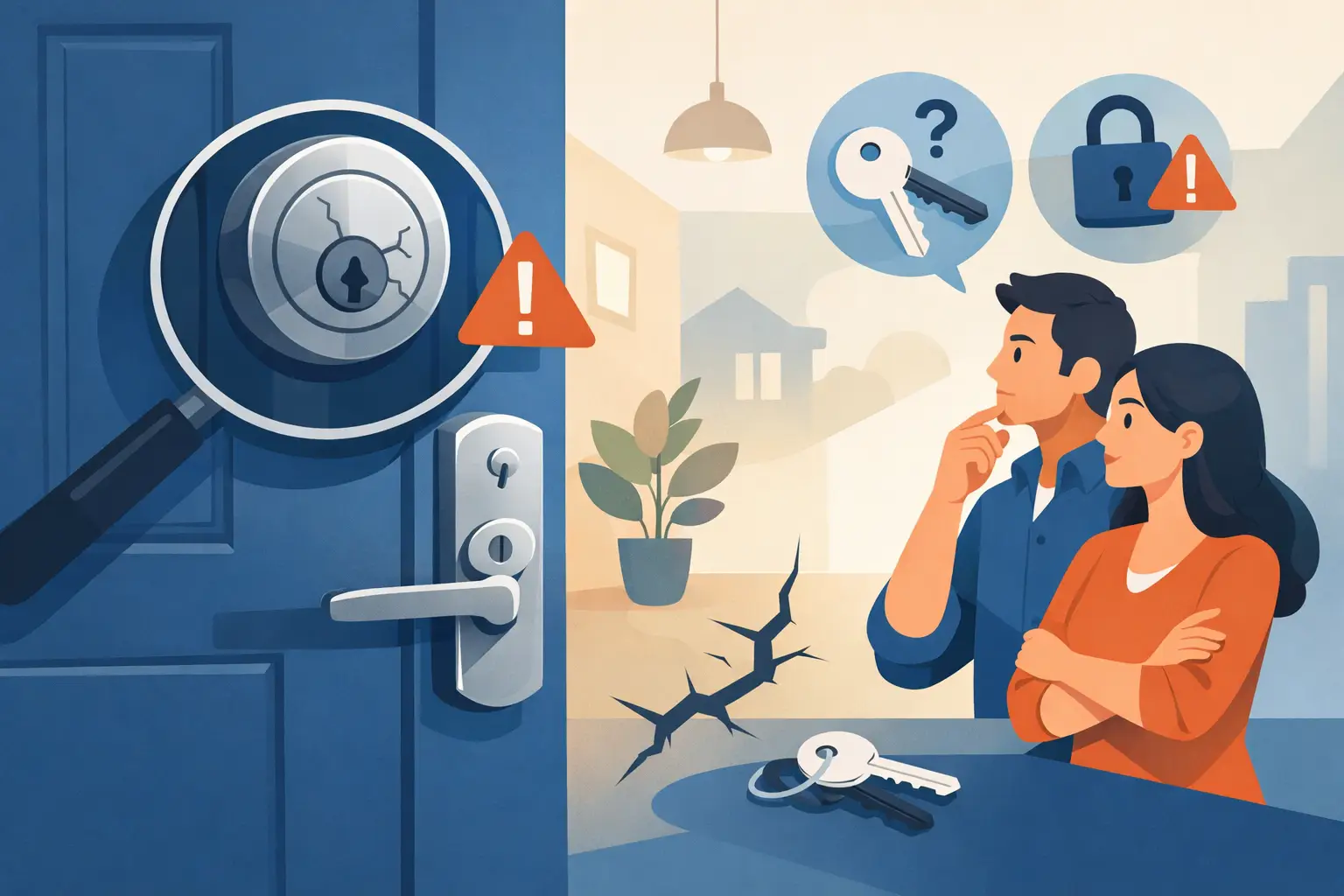

A front door lock that suddenly sticks at 10 p.m. is more than an inconvenience. Front door lock problems can keep you out of your own home, leave a door that does not fully secure, or turn a small repair into an urgent security issue. The right response depends on what the lock is doing, but forcing it is rarely the answer.
For South Florida homeowners and property managers, heat, humidity, salt air near the coast, heavy rain, and everyday use can all affect door hardware. A lock may be the part that gets blamed, even when the real issue is a swollen door, a shifted frame, or a worn strike plate. Knowing the warning signs helps you protect your property and avoid an unnecessary lockout.
Common Front Door Lock Problems and What They Mean
The key is hard to turn
If a key enters the cylinder but takes pressure to turn, stop before the key bends or breaks. The problem may be dirt or wear inside the lock cylinder, but it can also mean the latch is no longer lining up correctly with the strike plate on the frame.
Try gently pulling the door toward you or pushing it inward while turning the key. If the key works only when you move the door, alignment is likely the issue. If it remains difficult with the door open, the cylinder or internal lock mechanism may need professional service.
Do not use excessive force, pliers, or oil-based household sprays. They can leave residue that collects dirt and may make a failing lock worse. A broken key inside the cylinder often creates a more urgent and more involved repair.
The key turns, but the door stays locked
When the key rotates without retracting the latch or deadbolt, internal components may be worn, disconnected, or damaged. This is especially common in older locks that have been used for years without maintenance.
A lock in this condition can fail without warning. It may work once, then leave you unable to enter or secure the home the next time you use it. If the door is currently open, avoid closing it until the hardware has been checked. If it is locked and you cannot get inside, a mobile locksmith can gain entry without creating avoidable damage and determine whether repair or replacement makes more sense.
The deadbolt will not extend fully
A deadbolt should slide smoothly into the strike plate and extend completely when the door is closed. If it stops short, the door may look locked while the bolt is only partially engaged. That is a security concern, particularly on an exterior entry door.
Changes in temperature and moisture can cause a wood door or frame to shift slightly. Loose hinges can also let the door sag, moving the bolt out of alignment. Look for obvious loose screws around the hinges and strike plate, but do not enlarge holes or alter the frame without understanding the cause. A quick adjustment may solve the issue, while a recurring alignment problem could point to a door or frame condition that needs a more durable fix.
The lock is loose, wobbly, or pulling away from the door
A loose knob, lever, deadbolt thumb turn, or exterior trim plate should be addressed promptly. Loose hardware can make the lock difficult to operate and may give someone more leverage to damage it. In some cases, the mounting screws simply need proper tightening. In others, the door material or the lock itself has worn down.
This is not a problem to ignore because a lock can continue to function right up until the point it fails. A technician can secure the hardware, inspect the door preparation, and recommend whether the existing lock is still dependable.
The latch does not catch when you close the door
If you have to lift, shove, or repeatedly pull the door to get it to latch, do not assume it is safely closed. A latch that misses the strike plate can leave the door unlatched, even when it appears shut from a distance.
First, check whether the strike plate is loose or visibly misaligned. Also consider whether the issue appeared after severe weather, a door replacement, new flooring, or settlement around the frame. The repair may be simple, but exterior door alignment affects both daily access and home security, so it is worth correcting properly.
Your smart lock is acting unpredictably
Electronic and keypad locks add convenience, but their problems are not always mechanical. Low batteries, incorrect installation, worn bolt alignment, moisture exposure, or a disconnected interior cable can all cause inconsistent operation.
Replace batteries with fresh, high-quality batteries when the manufacturer recommends it, rather than waiting for a complete failure. If the keypad lights up but the bolt struggles, the issue may be door alignment instead of power. Keep a working physical key available when your lock model uses one, and do not rely on an app as your only way into the house.
When a Lock Problem Is an Emergency
Not every stiff lock requires an after-hours call. But certain situations should be treated as urgent: you are locked out, a key has broken inside the lock, the door will not secure, there are signs of attempted forced entry, or a tenant cannot safely access a property.
A compromised front door is not something to leave until morning. If the deadbolt will not lock, move valuables away from the entry, stay inside if you can do so safely, and call for professional assistance. If there are signs that someone has tried to force the door or tamper with the lock, avoid touching or disassembling the hardware until you have documented the damage if needed for a police report or insurance claim.
For rental properties, speed matters for a different reason. A broken lock affects the resident’s sense of safety and can quickly become a liability issue. Property managers benefit from having a dependable locksmith contact before an emergency occurs, especially for rekeys, damaged hardware, and tenant turnover.
Repair, Rekey, or Replace?
The best solution is not always a new lock. If the hardware is in good condition but keys are missing, a former resident still has a key, or you have recently moved in, rekeying may be the practical choice. The lock cylinder is adjusted to work with new keys, while the existing hardware remains in place.
Repair can be worthwhile when the lock is high quality, the problem is limited to alignment or a replaceable internal part, and the hardware still meets your security needs. Replacement is often smarter when the lock is badly worn, damaged during a break-in attempt, difficult to operate repeatedly, or built with lower-grade components.
Security upgrades also deserve a realistic conversation. A basic deadbolt may be sufficient for some homes, while others benefit from a reinforced strike plate, longer screws anchored into framing, restricted-key systems, or higher-security options such as Medeco, Mul-T-Lock, or Primus. The right choice depends on the door construction, location, who needs access, and your budget. More security is valuable only when it is installed correctly and remains easy for household members to use.
Avoid Making the Problem Worse
When your front door will not work normally, frustration can lead to expensive mistakes. Avoid kicking the door, drilling the lock, prying the frame, or attempting to remove parts while locked out. These actions can damage the door, frame, glass, weather stripping, or security hardware well beyond the original issue.
Also be careful with online repair advice that assumes every lock is the same. Residential locks vary by brand, age, function, and installation. A step that is harmless on one model can disable another. If you are unsure whether the door is actually secure, treat it as a service call rather than a weekend project.
Get Help Before a Small Failure Becomes a Lockout
A front door should close, latch, lock, and open without a struggle. If yours is sticking, loosening, turning inconsistently, or failing to secure, arrange service before you are standing outside with groceries, children, or pets after dark.
General Locksmith provides mobile residential lock repair, replacement, rekeying, and emergency lockout assistance across Broward County and nearby South Florida communities. Our licensed, insured, and bonded technicians are available 24/7, with no extra charges for weekends or holidays. Call 954-243-1381 for immediate help or to schedule an inspection. A working front door lock is one of the simplest ways to feel secure at home, and it is best fixed before it decides for you when it needs attention.