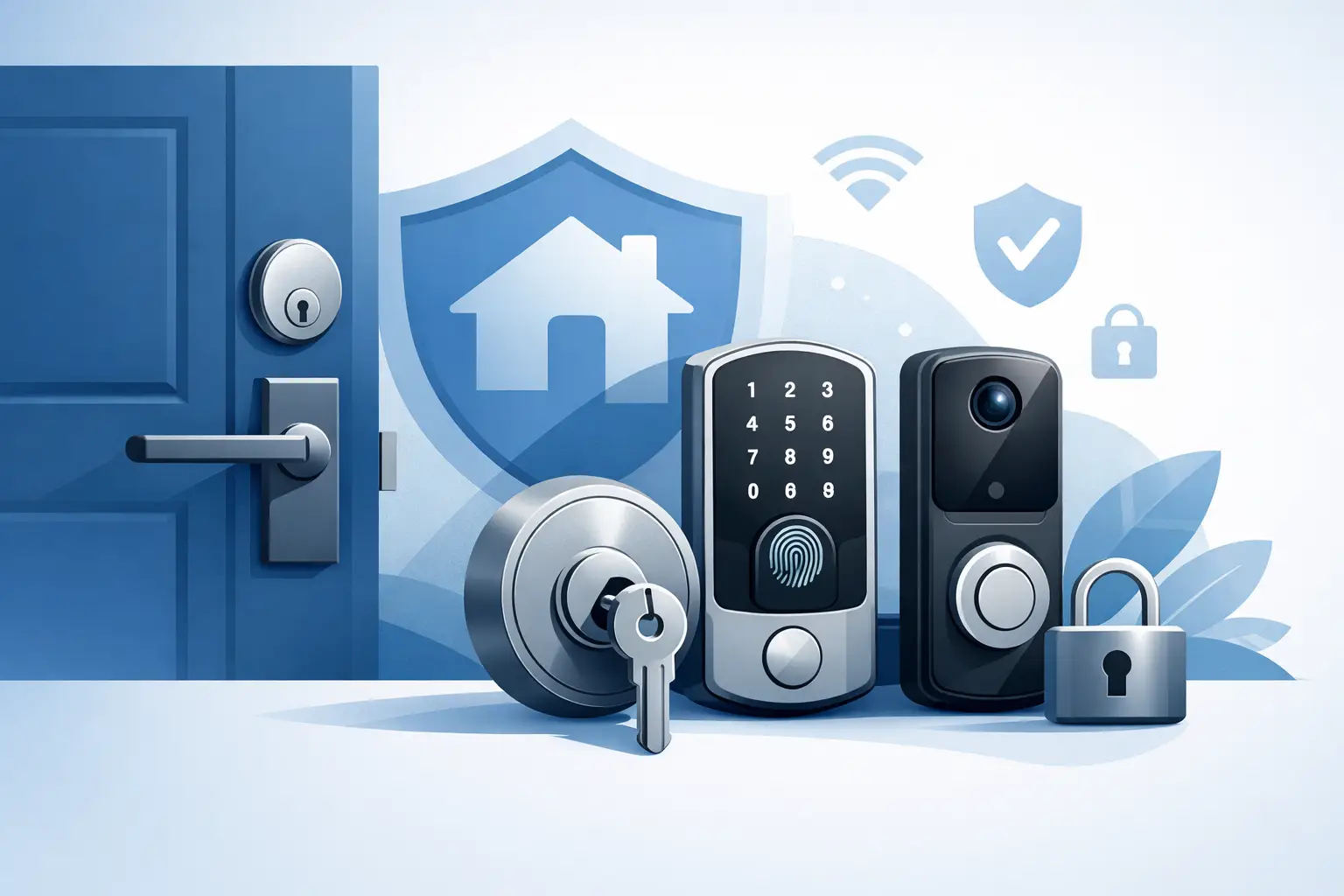

A front door usually gets blamed after a break-in, but the real problem is often the hardware choice made long before anything went wrong. If you’re comparing the best locks for front door security, the right answer is not always the most expensive lock on the shelf. It is the lock that matches your door, your frame, your daily habits, and the level of risk you actually need to manage.
For some homes, a properly installed Grade 1 deadbolt is the clear winner. For others, a high-security cylinder or a smart lock with the right backup features makes more sense. The key is knowing what each option does well, where it falls short, and what matters most for your entry door.
What actually makes a front door lock secure
A strong lock matters, but lock strength is only one part of the equation. Front door security depends on the lock, the strike plate, the door material, the frame, and the quality of the installation. A premium deadbolt installed on a weak jamb can still leave you exposed.
That is why professionals look at the whole opening, not just the lock body. If your door has short screws, a loose frame, misalignment, or an old knob lock doing all the work, replacing only the visible hardware may not solve much. Good security starts with a deadbolt that throws solidly into a reinforced strike and closes cleanly every time.
Best locks for front door security: the main options
Single-cylinder deadbolts
For most homeowners, this is still the standard answer. A single-cylinder deadbolt uses a key on the outside and a thumbturn on the inside. It is practical, familiar, and effective when you choose a high-quality model and install it correctly.
The biggest advantage is simple reliability. Fewer moving parts usually means fewer problems, and in an emergency, it is fast to unlock from inside. This type works especially well for main residential entrances where easy exit matters.
The trade-off is that not all deadbolts are built the same. A bargain lock from a big box store may look solid but use lighter internal components and offer weaker resistance against picking, bumping, drilling, or forced entry.
Double-cylinder deadbolts
A double-cylinder deadbolt requires a key on both sides. Some homeowners consider these because they worry about someone breaking nearby glass and reaching in to turn the thumbturn.
That concern is understandable, but this option needs caution. A lock that requires a key to exit can create a safety issue during a fire or emergency. Local codes may restrict or discourage their use in some settings. If your front door has glass close enough to make reach-through entry realistic, there may be better ways to address the risk without making exit harder.
High-security deadbolts
If you want a stronger step up from standard residential hardware, high-security deadbolts are worth serious attention. These locks are designed with tougher cylinders, tighter key control, stronger resistance to drilling and picking, and better overall build quality.
Brands such as Medeco, Mul-T-Lock, and Primus are often chosen when homeowners want more than basic protection. They are especially useful if you have concerns about unauthorized key duplication, repeated tenant turnover, targeted theft, or a front entry that has already had security issues.
The main downside is cost. You will pay more for the hardware and, in many cases, for proper professional installation. But for homeowners who want lasting protection rather than a cosmetic upgrade, this is often money spent in the right place.
Smart locks
Smart locks appeal to homeowners who want convenience along with control. Depending on the model, you can lock and unlock by code, app, fingerprint, or voice assistant, and some systems let you check lock status remotely.
That convenience can improve real security in daily life. People are less likely to leave the door unlocked if the system auto-locks. Temporary codes are useful for dog walkers, cleaners, guests, and service providers. You can also remove access without collecting physical keys.
But smart locks are not automatically more secure than a strong mechanical deadbolt. Some are excellent, and some prioritize features over physical durability. Battery dependence, connectivity issues, and poor installation can all create headaches. If you choose a smart lock, look beyond the app and focus on the lock’s physical security rating and backup entry options.
The lock grade matters more than marketing
One of the easiest ways to compare locks is by ANSI or BHMA grade. Grade 1 is the highest residential and commercial standard for durability and security, Grade 2 is a strong middle ground for many homes, and Grade 3 is the lightest duty.
If front door security is the goal, Grade 1 is the strongest choice when your budget allows. Grade 2 can still be a solid option for many residential properties, especially when paired with a reinforced strike and proper installation. Grade 3 is usually where homeowners save money upfront and regret it later.
Marketing terms on packaging can sound impressive, but a tested hardware grade gives you a more useful benchmark.
Don’t ignore the door and frame
A lock can only do so much if the surrounding structure is weak. This is where many front door setups fail. A deadbolt with a one-inch throw means very little if the strike plate is fastened with short screws into trim instead of framing.
Reinforcing the strike area with longer screws and quality hardware can make a major difference. In some cases, a security strike or door reinforcement plate delivers more practical protection than upgrading from one average lock to another. If your door sticks, shifts with humidity, or never lines up quite right, that should be corrected too. Misalignment causes wear and can keep the bolt from fully engaging.
Rekeying, key control, and who has access
Security is not only about break-in resistance. It is also about controlling access over time. If you moved into a new home, lost a key, finished a renovation, or handed out copies over the years, the best lock may be the one that restores control.
Rekeying can be a smart solution when the lock body is still worth keeping. If the hardware is low quality or worn out, replacement makes more sense. High-security key systems add another layer by reducing unauthorized duplication. That matters more than many homeowners realize, especially in shared households, rental properties, and homes that have changed hands.
Choosing the best lock for your situation
The best choice depends on how you use the door and what kind of risk you are trying to reduce. If you want straightforward, dependable protection, a quality Grade 1 single-cylinder deadbolt is usually the safest recommendation. If you want stronger key control and better resistance to tampering, a high-security deadbolt is a better fit.
If convenience is a daily issue, a smart lock can be the right move, but only if you choose one with solid mechanical security and reliable backup access. If your concern is a glass panel near the lock, do not assume a double-cylinder deadbolt is the automatic answer. Life safety should be part of the decision.
This is also where professional guidance helps. The right recommendation can change based on door thickness, frame condition, occupancy, code concerns, and whether the existing prep supports the lock you want.
When professional installation is worth it
A front door lock is not a good place for guesswork. Small mistakes in backset, alignment, strike placement, or screw length can weaken the entire setup. Professional installation becomes especially valuable when you are upgrading to high-security hardware, converting to smart access, dealing with door misalignment, or securing a property after a move, break-in, or tenant change.
A locksmith can also tell you when your current lock is fine and the problem is somewhere else. That kind of honest assessment saves time and money. For homeowners in South Florida, where weather, wear, and heavy use can affect exterior hardware faster than expected, that practical eye matters.
A few mistakes homeowners make all the time
The first is relying on the knob lock as the main security device. Entry knobs are not a substitute for a deadbolt. The second is buying based on appearance alone. A lock can feel heavy in your hand and still have weak internal components. The third is forgetting that spare keys, old tenants, contractors, or previous owners may still have access.
Another common issue is mixing convenience with false confidence. A smart lock is helpful, but if the bolt, cylinder, or strike is weak, the technology does not fix the basics.
If you want a front door that feels genuinely secure, focus on tested hardware, solid installation, and controlled access. If you are unsure what your current setup is really doing for you, having it evaluated by a licensed locksmith is often the fastest way to make the right next move. A good lock should not just look secure when the door is closed. It should hold up when security is actually tested.