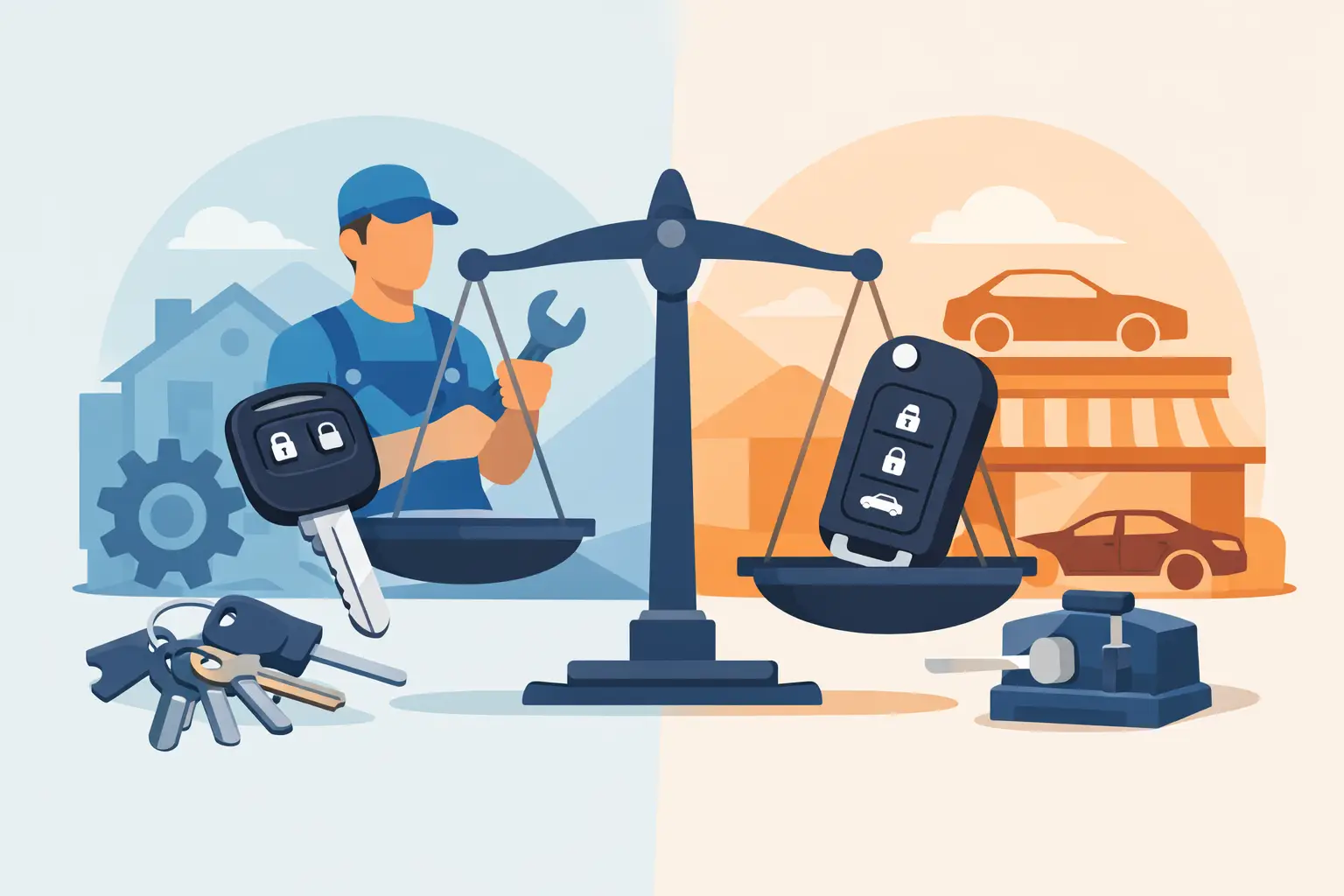

A lost car key can turn an ordinary South Florida errand into a costly delay, especially when your vehicle will not start without a programmed fob. When comparing locksmith versus dealership keys, the best choice is not always the cheapest quote. It comes down to your vehicle, the type of key you need, how quickly you need it, and whether the provider can complete the programming correctly.
For many drivers, a qualified mobile automotive locksmith can replace and program a key where the car is parked. A dealership may be the better fit when an OEM-only key, factory warranty requirement, or unusual vehicle security system is involved. Knowing the difference before you call helps you avoid unnecessary towing, long waits, and a key that does not work when you need it.
Locksmith Versus Dealership Keys: The Real Difference
A dealership works directly with a specific vehicle manufacturer. Its parts department typically supplies original equipment manufacturer, or OEM, keys and remotes designed for that brand. Dealership technicians also have factory diagnostic systems and access to manufacturer procedures. That can be valuable for very new models, specialized imports, and complicated security systems.
An automotive locksmith is a key and vehicle-access specialist who can often travel to the vehicle with cutting equipment, diagnostic tools, key blanks, remotes, and programming software. Rather than bringing your car to a service department, the service comes to your driveway, office, parking garage, or roadside location.
The practical difference is convenience. If every key is missing and the vehicle cannot be driven, a dealership replacement may require arranging a tow, waiting for an appointment, and returning later after the key is ordered or programmed. A mobile locksmith may be able to create a working key on-site, often the same day, if the make, model, and key technology are supported.
That does not mean every locksmith can handle every vehicle. Advanced European models, brand-new platforms, certain luxury vehicles, and systems with restricted programming may require dealer-level equipment or manufacturer authorization. A reputable locksmith will tell you that upfront instead of promising a result they cannot deliver.
Cost Depends on More Than the Key Blank
Drivers often assume a locksmith key is always cheaper and a dealership key is always more reliable. Neither statement is universally true.
For a basic metal key, a locksmith is often the faster and more economical option. There is little technology involved, and the key can usually be cut quickly. The equation changes with transponder keys, remote-head keys, push-button-start proximity fobs, laser-cut keys, and smart keys. These require a compatible remote or chip, precise cutting when applicable, and programming that allows the vehicle to recognize the key.
A dealership may charge more because it uses OEM parts and follows factory procedures. In some cases, that additional cost is justified. OEM remotes can offer the best fit, finish, range, and long-term consistency for a particular vehicle. If your car is under warranty or a lease agreement has strict replacement requirements, ask whether an aftermarket key could affect your coverage or lease return expectations.
A locksmith may offer OEM, aftermarket, or refurbished options depending on the vehicle. Quality aftermarket keys can be a sensible value for many common makes and models, but they are not all equal. A lower upfront price is not a good deal if the remote buttons fail early, the proximity feature works inconsistently, or the key cannot be properly programmed.
When requesting estimates, compare the complete job, not just the price of the fob. Ask whether the quote includes the key or remote, cutting, programming, mobile service, taxes, and any diagnostic or emergency service charges. If all keys are lost, the job may involve additional procedures to retrieve key information or reset vehicle security data. That naturally costs more than duplicating an existing working key.
Speed Can Matter More Than a Small Price Difference
A dealership is usually open during business hours and may need time to order the correct key. Even when the part is in stock, programming may require a scheduled service visit. This works well when you have a spare key, can drive the vehicle, and prefer a factory-supplied replacement.
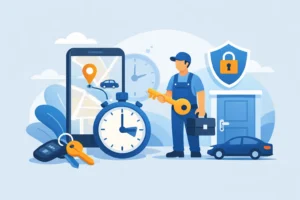
A mobile locksmith is often the practical choice when the problem is immediate. You may be locked out at a shopping center, stranded after losing your only key, or unable to start your car outside work. The ability to bring tools to the vehicle can save hours and remove the need for a tow.
Speed still depends on accurate information. Have your vehicle year, make, model, trim level, and vehicle identification number ready. Tell the provider whether you have any working keys. A photo of the existing key or remote can also help identify the correct replacement. This allows the technician or dealer to confirm availability before anyone starts the job.
For urgent automotive key service in Broward County and nearby South Florida communities, General Locksmith provides mobile assistance around the clock. Call 954-243-1381 to confirm support for your vehicle and get clear information about the next available service option.
Programming Is Where Experience Counts
Most modern vehicles use an immobilizer system. The mechanical key may turn the ignition or open the door, but the vehicle will not start unless the transponder chip or smart fob is electronically recognized. Programming is not an optional extra. It is a core part of making a replacement key useful.
Dealerships use manufacturer tools and software, which can be especially beneficial for the newest vehicle systems. Locksmiths use professional automotive diagnostic and programming equipment that supports a broad range of makes. For many vehicles on the road, an experienced automotive locksmith can perform the same practical result: a properly cut and programmed key that starts the car and operates the remote functions.
Before choosing either option, ask a direct question: will the replacement key start the vehicle, lock and unlock the doors, and perform the functions I use every day? For a proximity fob, that can include passive entry, push-button start, trunk release, panic button, remote start, and memory settings. Not every replacement supports every convenience feature.
Be careful with online keys and used fobs. An inexpensive blank purchased online may be the wrong frequency, use an incompatible chip, or be locked to another vehicle. Some used smart keys cannot be reused at all. Even if a key looks identical, its internal electronics may not match your car. Buying first and asking questions later can leave you paying twice.
When the Dealership Is the Better Choice
There are situations where going to the dealer is sensible. If your vehicle is very new, rare, highly specialized, or still subject to a manufacturer warranty that requires OEM components, a dealership can provide a clear factory path. The same can apply if the manufacturer has restricted key programming access or if a recall or software update needs to be addressed alongside the key replacement.
A dealership can also be a good choice when you are not in a hurry and want an original branded fob with a documented service record. If you have a spare key and can schedule around the dealership’s availability, convenience is less of a concern.
Still, confirm the full process before arranging a tow. Ask whether the key is in stock, whether the vehicle must be present, how long programming takes, and whether proof of ownership is required. Those details prevent an expensive surprise at the service counter.
When a Locksmith Makes More Sense
A locksmith is often the stronger option when your key problem cannot wait. Mobile service is especially useful for all-keys-lost situations, lockouts, broken keys, damaged ignitions, and vehicles stranded at home, work, or a public lot. It is also a practical choice when you want to avoid towing a vehicle that will not start.
Choose a locksmith carefully. Ask whether the technician is licensed, insured, and experienced with your vehicle’s key type. Confirm that the company can provide the key, cut it, and program it before dispatching service. A professional should request proof of ownership or authorization before creating a vehicle key. That protects you and helps keep stolen-vehicle access out of the wrong hands.
If you own a fleet, manage rental units with shared vehicles, or depend on a work truck, consider making a spare key before an emergency happens. Replacing a second key while one working key remains is usually simpler and less stressful than starting from zero after the only key disappears.
Make the Choice Based on Your Situation
The right answer is rarely just locksmith or dealership. It is OEM certainty versus mobile convenience, scheduled service versus urgent help, and factory-specific tools versus broad on-site expertise. Your vehicle’s age and security system matter, but so does the immediate reality of whether you can get to work, pick up your children, or move a vehicle that is blocking your driveway.
Before you commit, get a complete quote, verify what functions the replacement will support, and make sure programming is included. A dependable key replacement should give you more than access to the car. It should give you confidence that the vehicle will start and that you have a reliable plan if the next key is lost.