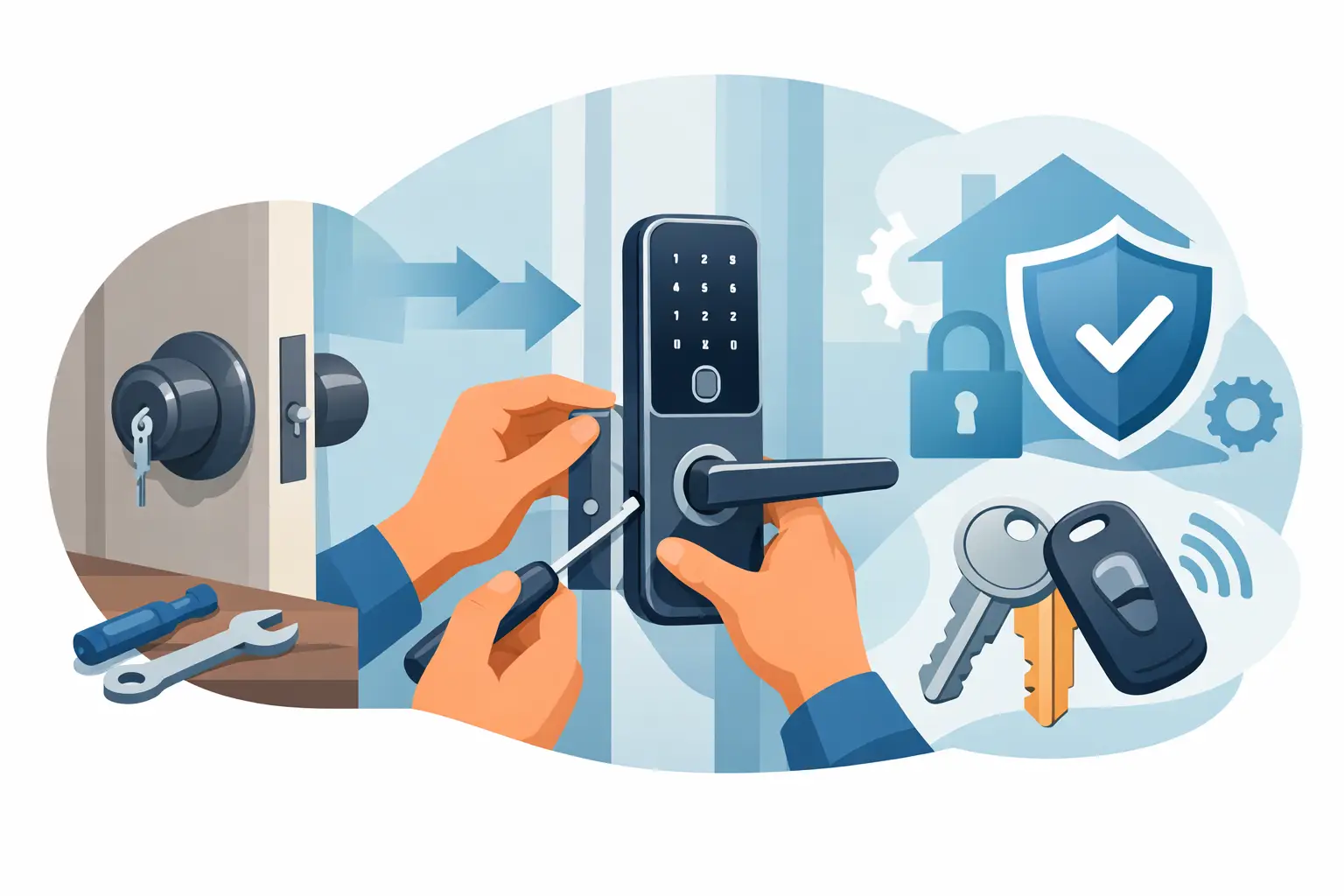

That front door may look solid, but the lock is often the first thing a burglar tests. If you’re wondering how to upgrade door locks, the best move is not always buying the most expensive hardware on the shelf. Real security comes from choosing the right lock for the door, fixing weak points around it, and making sure the installation is done correctly.
For homeowners, landlords, and business owners, lock upgrades usually happen for one of three reasons. The old lock is worn out, access control has changed, or the current setup no longer feels secure enough. Each reason matters because the right upgrade depends on what problem you’re actually trying to solve.
How to upgrade door locks without wasting money
A lot of people start with the deadbolt itself, and that makes sense. But before you replace anything, take a close look at the full opening – the door, the frame, the strike plate, the hinges, and the way the lock lines up when it closes. A high-security deadbolt installed on a weak frame is still a weak entry point.
If your current lock sticks, needs jiggling, or leaves visible gaps between the door and frame, that may be more than simple wear. It can mean the door is out of alignment, the strike plate is loose, or previous hardware was installed poorly. In those cases, upgrading the lock alone may not solve the real issue.
The most cost-effective path is usually one of three options: rekey the existing lock, replace it with a better standard deadbolt, or move to a high-security or smart lock system. Which one makes sense depends on your budget, how many people need access, and how much protection you want.
Start with the type of lock you have now
Most residential exterior doors have a keyed knob or lever plus a deadbolt. If your door only locks at the knob, that is a good place to improve immediately. Knob locks are not built to handle forced entry on their own. A properly installed deadbolt adds much stronger resistance.
If you already have a single-cylinder deadbolt, the next question is quality. Basic builder-grade locks can work fine for a while, but they often wear faster and offer less resistance to picking, bumping, drilling, or forced attacks. Upgrading to a better deadbolt can improve both durability and security without changing how you use the door every day.
For commercial properties or busy rental units, wear and tear matters just as much as break-in resistance. A lock that sees constant traffic needs to hold up under daily use. In those cases, commercial-grade hardware is often the better long-term investment, even if the upfront cost is higher.
When rekeying is enough
Not every upgrade requires brand-new hardware. If the lock itself is in good shape but you do not know who has keys, rekeying may be the right fix. This is common after moving into a new home, tenant turnover, staff changes, or lost keys.
Rekeying changes which key works with the lock, without replacing the full unit. It is faster and usually more affordable than a full replacement. The trade-off is simple: it improves key control, but it does not make a weak lock stronger.
When replacement makes more sense
If the hardware is old, loose, rusted, damaged, or low grade, replacement is usually the better call. This is especially true in South Florida, where heat, humidity, and salt air can wear down exterior hardware faster than many people expect. Corrosion, sticking cylinders, and sagging alignment are all signs that a lock may be due for more than a simple tune-up.
Choosing the right upgrade for your door
A standard deadbolt upgrade works well for many homes. Look for a solid metal deadbolt with a reinforced strike plate and a properly seated latch. The lock should feel tight and smooth, not loose or flimsy. Good installation matters as much as the brand name.
If you want stronger protection, high-security locks are worth considering. These systems are designed with tighter key control and stronger resistance to common attack methods. Brands like Medeco, Mul-T-Lock, and Primus are often used when people want more than basic hardware. They cost more, and duplicate keys are more controlled, which is exactly why many homeowners and business owners choose them.
Smart locks are another common upgrade, especially for rental properties, family homes, and offices with changing access needs. They can make everyday access easier by using codes, apps, or scheduled entry. The convenience is real, but smart locks are not automatically better in every situation.
A good smart lock should still have strong physical hardware behind the tech. Battery life, Wi-Fi reliability, user management, and backup entry options all matter. For some customers, a traditional high-security deadbolt paired with a separate access system is the better fit. It depends on whether your top priority is convenience, audit trails, remote control, or brute-force resistance.
How to upgrade door locks at the frame and strike plate
This is the part many people skip, and it is one of the most important. A stronger lock means less if the strike plate is attached with short screws into weak trim. During forced entry, the frame often fails before the lock does.
Upgrading the strike plate and using longer screws that anchor into the wall framing can make a major difference. Reinforcing the frame helps the door resist kick-ins and hard impacts. If the door is hollow, warped, or damaged around the lock bore, that should also be addressed. Security is only as strong as the weakest part of the opening.
For outward-opening doors, hinge security also matters. Hinges with exposed pins may need non-removable pins or added security studs. On glass-adjacent doors, lock choice should account for reach-through risk. In some setups, a double-cylinder deadbolt may be considered, but life safety and local code concerns need to be weighed carefully.
Don’t ignore door material and exposure
A lock upgrade on a solid wood, fiberglass, or steel door usually performs better than the same lock on a weak or damaged slab. Sun, rain, and coastal exposure can also shorten the life of some finishes and internal components. Exterior-rated hardware is worth it when the door takes direct weather.
If the door swells during humid months or drags against the frame, fix that as part of the upgrade. Otherwise, even a quality lock can bind and wear prematurely.
DIY vs. professional installation
Some lock upgrades are straightforward. If you are replacing a standard deadbolt with the same size and backset, and the door is already in good condition, a DIY install may go smoothly. The risk is not usually getting the lock on the door. The risk is poor alignment, loose mounting, stripped screws, or ending up with hardware that does not fully engage.
Professional installation is a better choice when you are upgrading to high-security hardware, adding smart access, dealing with metal doors, correcting alignment problems, or securing a commercial property. It also helps when you are not fully sure what type of lock your situation calls for.
A licensed, insured, and bonded locksmith can identify problems most people miss on a quick inspection. That includes weak frame attachment, improper latch throw, worn cylinders, and compatibility issues between old doors and new hardware. If you are changing locks because of a break-in, lost keys, tenant turnover, or business security concerns, getting it done right the first time matters.
Common mistakes people make when upgrading locks
The biggest mistake is treating all locks as if they offer the same protection. They do not. Price alone is not a perfect guide either. Some customers overspend on features they will never use, while others buy a low-cost lock that solves nothing.
Another common mistake is upgrading only one door. If the front door gets a new high-security deadbolt but the side garage entry still has weak hardware, the property still has an easy target. The same goes for rear doors, office side entries, and tenant common areas.
People also forget about key control. If multiple copies of a house key are floating around from old tenants, contractors, dog walkers, or former employees, the problem is not only the lock strength. It is who can still get in.
If you need fast help choosing or installing the right upgrade, General Locksmith provides 24/7 mobile locksmith service for residential and commercial customers, including high-security lock solutions when basic hardware is not enough.
The best lock upgrade depends on what you need to protect
For a homeowner, the right answer may be a quality deadbolt, rekeyed cylinders, and frame reinforcement. For a rental property, it may be a smart lock with controlled user access. For a storefront or office, it may be a restricted key system with commercial-grade hardware.
The goal is not to buy the fanciest lock. The goal is to make entry harder for the wrong person and easier to manage for the right ones. When your locks match the property, the traffic level, and the real risks, you get more than a hardware upgrade. You get peace of mind every time that door closes.