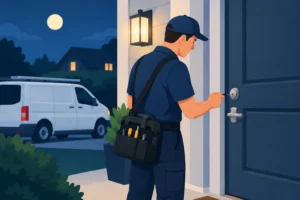

A former employee leaves with a key. A manager cannot account for a master key. A tenant moves out, and the next business is scheduled to open tomorrow morning. Those are not situations to postpone. An office door rekey service changes who can enter your workplace without forcing you to replace every lock and door handle.
For many South Florida businesses, rekeying is one of the fastest ways to regain control of the building after a staffing change, lost key, or access concern. A qualified mobile locksmith can come to your location, assess the existing hardware, and change the internal key combination so old keys no longer work.
What an Office Door Rekey Service Actually Does
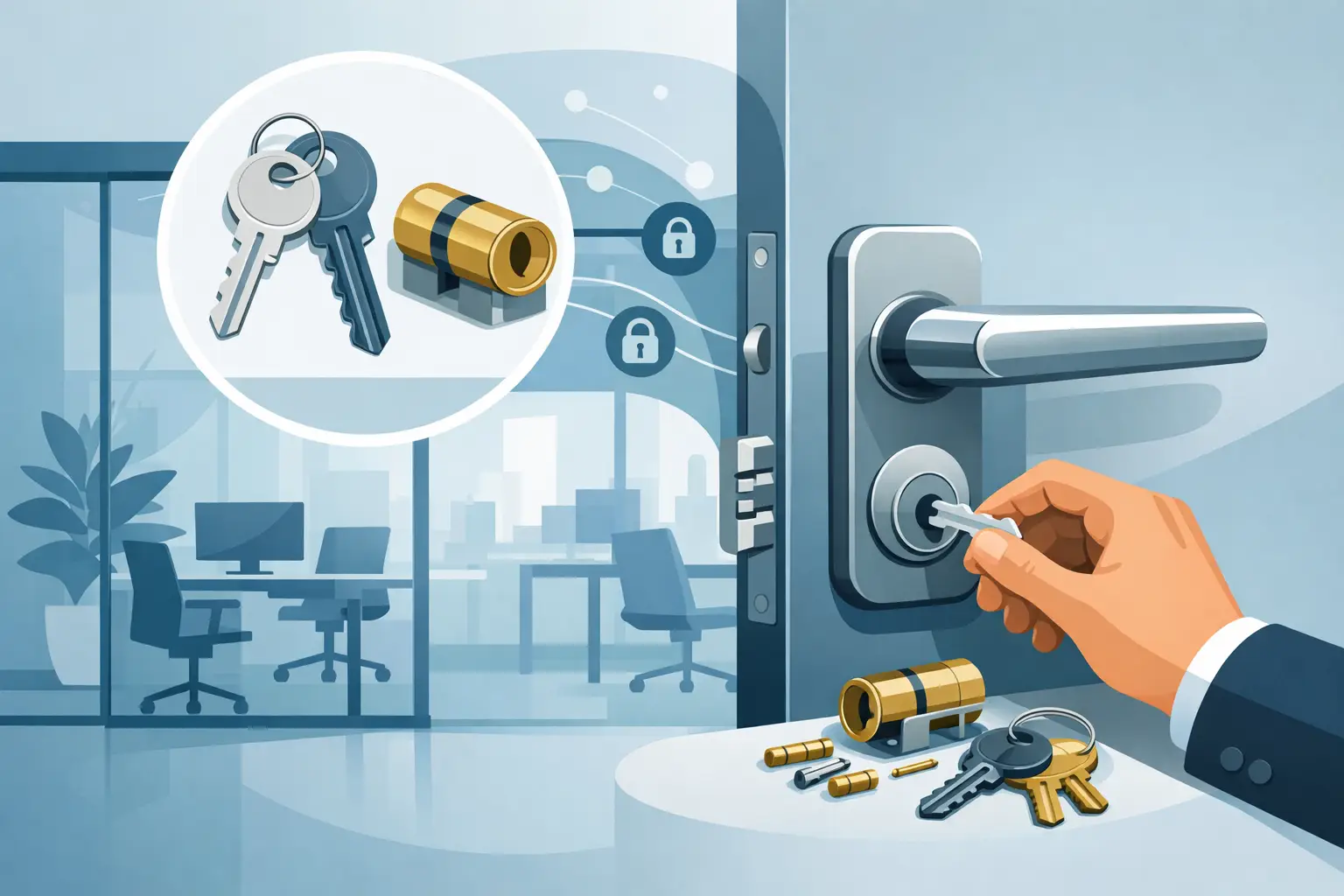
A lock is not controlled by the metal key alone. Inside most standard commercial cylinders are small pins arranged to match a particular key cut. During rekeying, a locksmith removes the cylinder, replaces or resets the pin configuration, and provides a new set of keys. The lock hardware stays in place, but the old key is no longer valid.
This is different from changing the lock entirely. A full lock replacement may be necessary if the hardware is damaged, outdated, incompatible with your security needs, or has been compromised by forced entry. But when the lock is in good working condition, rekeying is often the more efficient and cost-conscious option.
The result is immediate access control. Former keys stop working, authorized employees receive new keys, and your business avoids the disruption of replacing hardware that still has useful life.
When Your Business Should Rekey Office Doors
The best time to rekey is before access becomes an unknown. Businesses often wait until there is a break-in or conflict, but most rekeying calls are preventative and should be handled that way.
Staff turnover is a common reason. Even when an employee leaves on good terms, a business should not assume every issued key was returned or that no copies were made. The same applies when a cleaning vendor, maintenance contractor, temporary worker, or former partner had access to the office.
Lost or stolen keys deserve fast action, especially when the key can be connected to your business name, suite number, address, or marked vehicle. If a key ring identifies the location, the risk is higher because someone does not need to guess where it belongs.
Tenant turnover, management changes, and newly acquired offices are also strong reasons to rekey. You may receive keys at closing, but you cannot know how many prior copies are still in circulation. Rekeying lets the new business start with a clean access plan on day one.
After a break-in attempt, have the lock inspected before deciding whether to rekey. If the cylinder and door hardware remain secure, rekeying may be appropriate. If the lock is bent, loose, drilled, or otherwise damaged, replacement is usually the safer choice.
Rekeying vs. Replacing Commercial Locks
The right choice depends on the condition of your hardware and the level of protection your office needs. Rekeying is generally the practical answer when your existing commercial-grade locks function correctly and you simply need to cancel old keys.
Replacing locks makes more sense when you are upgrading from basic hardware, correcting an improperly installed lock, moving to a restricted keyway, or adding features such as a keypad, lever lock, panic hardware, or electronic access control. Businesses in buildings with multiple suites may also need to coordinate with a property manager before changing hardware, particularly if the door is part of a master-keyed system.
A professional locksmith should explain the difference clearly. The lowest immediate price is not always the best value if the lock is worn out or easy to bypass. On the other hand, replacing a sound commercial lock just to change keys can add unnecessary expense and downtime.
Plan Access Before New Keys Are Cut
Rekeying works best when it is part of a simple, intentional key plan. Before the locksmith arrives, decide which doors should be accessible to all staff and which spaces need limited access. Front offices, storage rooms, server closets, supply areas, and private records rooms may not need the same key.
For a smaller business, one key may operate the main entrance and several interior doors. For a larger office, a master-key system can let managers access multiple areas while limiting employees to only the doors relevant to their role. This improves accountability without making daily operations difficult.
Keep the number of keyholders controlled. Issuing keys casually creates the same problem you are trying to solve. Record who receives each key, require key return at separation, and avoid labeling keys with the business address. If you need more control than physical keys can provide, ask about restricted key systems or electronic access options.
Consider High-Security Key Control
Standard keys can often be copied at many retail locations. A higher-security cylinder from brands such as Medeco, Mul-T-Lock, or Primus can offer stronger key control and added resistance to common lock attacks. These systems may be a worthwhile investment for offices with valuable inventory, confidential files, expensive equipment, or frequent employee turnover.
High-security hardware costs more than basic commercial cylinders, and it may require authorized duplication procedures. That trade-off is often beneficial when you need to know exactly who can request additional keys and when.
What to Expect During a Rekey Visit
A reliable commercial locksmith starts by confirming the doors, lock types, and access needs. The technician will identify whether your existing cylinders can be rekeyed, whether any door hardware needs repair, and whether the door is part of a master-keyed system.
Once the plan is approved, the cylinders are removed and reconfigured for a new key. The locksmith then tests each key, checks that the latch and door close properly, and makes sure the lock operates smoothly from both sides where applicable. If you have several doors, the technician can organize them around the access plan you selected.
The work is usually much less disruptive than a full hardware replacement. Still, timing depends on the number of doors, the complexity of the key system, the condition of the locks, and whether specialized cylinders are required. For an active office, scheduling after hours can reduce interruptions. If you have an urgent concern, mobile locksmith service can address the problem quickly, including nights, weekends, and holidays.
Protect Your Office After Rekeying
New keys only help if your procedures support them. Assign keys carefully and avoid handing out extras without a record. When an employee changes roles or leaves the company, collect the key immediately and update your key log. If a key is not returned, treat it as unaccounted for rather than assuming it was lost.
Check the door itself, too. A strong cylinder cannot fully compensate for a loose strike plate, damaged frame, weak deadbolt, or door that does not latch. Exterior office doors should close and lock consistently without being forced. Back doors, storage entrances, and shared hallway access points deserve the same attention as the main entrance.
For property managers and business owners responsible for several units, establish a standard turnover procedure: collect keys, inspect hardware, rekey as needed, document who receives new keys, and verify the doors before the next tenant or employee arrives. It prevents rushed decisions when a vacancy turns over quickly.
Fast Help for Lost Keys and Urgent Access Changes
When an employee quits unexpectedly, keys disappear, or your office has been exposed to unauthorized access, waiting until next week is rarely the right move. Call General Locksmith at 954-243-1381 for immediate assistance or to schedule commercial rekeying service. Licensed, insured, and bonded technicians provide mobile support throughout Broward County and nearby Miami-Dade and Palm Beach communities, with no extra charge for weekends or holidays.
A rekey is a small operational decision that can prevent a much larger security problem. If you cannot confidently say who has keys to your office, it is time to put a new access plan in place.