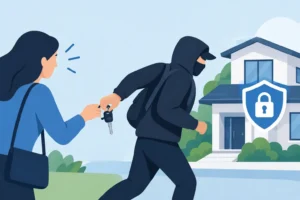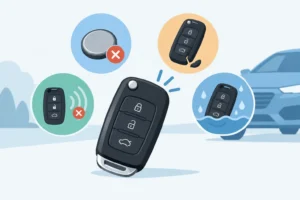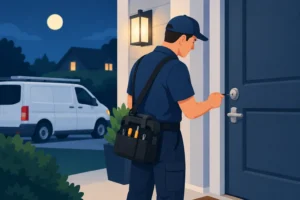
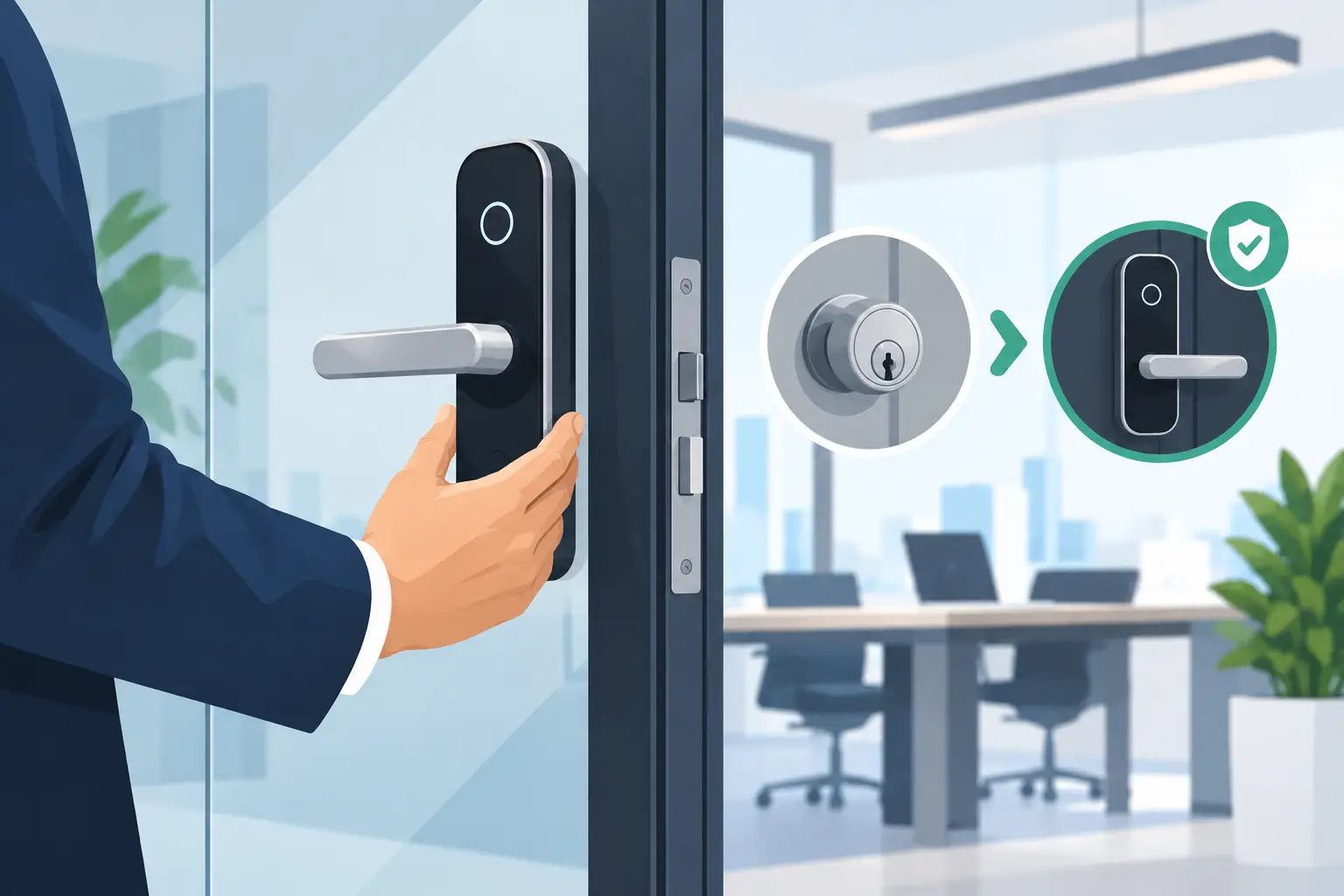

A storefront door that still locks can give business owners a false sense of security. If former employees may still have keys, the deadbolt is easy to bypass, or the rear exit has never been evaluated, the lock is doing less than it should. This commercial lock upgrade guide helps business owners and property managers identify weak points, choose the right level of protection, and make smart improvements without paying for hardware they do not need.
Start with the doors that create the most risk
Not every door needs the same lock. A customer entrance, employee-only rear door, stockroom, office suite, gate, and utility room each create a different access risk. Begin with the doors that protect cash, inventory, customer information, tools, medications, or restricted areas.
Look closely at how each entrance is used. A front door with steady traffic needs durable hardware that can handle repeated use. A back door that employees use after dark may need stronger locking, better door reinforcement, and controlled key access. A seldom-used side door can become a quiet weak point if nobody is responsible for checking it.
Also inspect the door itself. A high-security cylinder cannot fully protect a hollow, damaged, or poorly aligned door. Loose hinges, thin strike plates, worn closers, gaps around the frame, and warped doors can all reduce the value of an otherwise good lock. The best upgrade is often a combination of quality locking hardware and a properly secured frame.
When a commercial lock upgrade is overdue
Most businesses do not need to wait for a break-in to take action. Certain situations call for a security review right away. If keys have changed hands repeatedly, a tenant has moved out, an employee has left without returning keys, or a manager cannot say who has copies, rekeying or replacing the locks should be a priority.
Visible wear matters, too. A key that sticks, a latch that does not catch consistently, or a deadbolt that takes force to turn is not just an inconvenience. It can lead to a lockout, a door that does not secure completely, or a failure during an emergency.
Consider an upgrade if your current locks are standard residential-grade hardware, if the same key opens too many unrelated doors, or if you have experienced attempted forced entry. Businesses that handle valuable inventory or sensitive records may also need a higher level of key control than an ordinary cylinder provides.
Choose the protection level that fits the property
Commercial security is not one-size-fits-all. The right solution depends on the type of business, operating hours, number of employees, turnover, and the consequences of unauthorized entry.
Rekeying for immediate key control
Rekeying changes the internal configuration of an existing lock so old keys no longer work. It is often a practical choice after staffing changes, tenant turnover, or lost keys, provided the lock body and cylinder are still in good condition.
Rekeying costs less than replacing every lock, but it does not make weak hardware stronger. If the lock is worn, easily picked, or attached to an inadequate door frame, a new key alone will not solve the underlying problem.
High-security cylinders for stronger key protection
Restricted or high-security cylinders can help prevent unauthorized key duplication and offer greater resistance to common manipulation techniques. Options from established security brands such as Medeco, Mul-T-Lock, and Primus are often a strong fit for offices, retail locations, warehouses, medical spaces, and properties with valuable equipment.
The trade-off is cost and administration. High-security keys should be managed carefully, and authorized duplication may require verification. For many businesses, that control is exactly the point. For a low-risk storage closet, it may be more protection than necessary.
Grade-rated commercial hardware for active doors
Busy exterior and interior doors benefit from commercial-grade levers, deadbolts, panic hardware, and door closers. Grade-rated hardware is designed for heavier use than typical residential locks. A properly installed commercial lever can improve durability, accessibility, and daily convenience while supporting a stronger overall security plan.
For exit doors, life safety comes first. Panic bars and exit devices must allow people to leave quickly and safely. Never add hardware that blocks an emergency exit or interferes with fire code requirements. A professional locksmith can help select compatible hardware and identify when a door needs additional service.
Electronic access control when keys are hard to manage
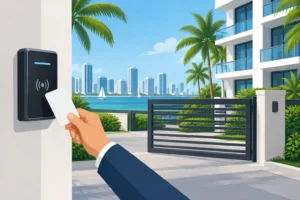
Keypads, key cards, fobs, and mobile credentials can make sense when several people need different access levels. Instead of collecting keys after every staffing change, management can remove a user from the system. Some systems also create an access record, which can be useful for offices, shared workspaces, and restricted storage areas.
Electronic access is not automatically better for every business. It requires reliable installation, power planning, user management, and a clear plan for emergencies or outages. A small business with two trusted employees may be better served by high-security mechanical locks. A larger operation with shifts and frequent turnover may save time and reduce risk with managed electronic access.
Do not overlook the frame, strike, and hinges
Forced entry often targets the weakest connection between the door and the frame. A reinforced strike plate secured with long screws into solid framing can make a meaningful difference. On outward-swinging doors, exposed hinges may need security hinges or non-removable pins. Metal storefront doors may require specialized hardware and accurate alignment to latch properly.
Door closers also deserve attention. A door that fails to close fully cannot latch and lock as intended. If employees prop a door open because the closer is too heavy or the lock is difficult to use, the problem is operational as well as mechanical. Fixing the hardware and setting clear procedures work better than relying on reminders alone.
Build a key system people can actually manage
A strong lock can be undermined by a loose key policy. Assign keys by person or role, keep a simple record of who has them, and collect keys immediately when an employee leaves. Avoid unlabeled master keys in desk drawers, lockboxes with widely shared codes, or a single key that opens every door on the property.
A master key system can simplify access for owners and managers while limiting employees to the areas they need. However, master keying should be designed carefully. The more doors one key opens, the greater the impact if that key is lost. Balance convenience with separation between offices, inventory rooms, maintenance areas, and tenant spaces.
For properties with frequent personnel changes, set a written trigger for rekeying or updating access credentials. Waiting until a concern arises creates uncertainty that is hard to track later.
Plan upgrades around daily operations
Before scheduling work, decide which doors can be serviced during business hours and which should be handled after closing. A professional technician can often phase an upgrade so your business remains secure and accessible throughout the process.
Make a list of each door, the people who use it, current keyholders, and any problems you have noticed. Photos and door measurements can help during an initial discussion, but an on-site assessment is the best way to identify alignment issues, incompatible hardware, and frame weaknesses.
If you manage a business in Broward County, Miami-Dade, or Palm Beach County, General Locksmith can provide mobile commercial locksmith service, lock repair, rekeying, and high-security upgrade options. The team is available 24/7 for urgent access problems as well as scheduled security work. Call 954-243-1381 to discuss the doors that need attention and schedule service.
A better upgrade starts with one honest question
Ask yourself: if someone lost a key, copied one, or tried the weakest door tonight, would you know where your business stands? If the answer is no, start with a professional assessment of your highest-risk entrances. A focused upgrade now can prevent a stressful call, lost inventory, or disrupted business later.